Home / Guides / Learning medicine
What Is a Tertiary Hospital? Services, Levels of Care & Examples
Learn what a tertiary hospital is, its services, examples, and the difference between primary, secondary, and tertiary healthcare levels.
On this page (46 sections)
- What Is a Tertiary Hospital?
- What Does Tertiary Care Mean?
- What Services Does a Tertiary Hospital Provide?
- Advanced Surgical Services
- Intensive Care Units (ICU)
- Specialized Medical Departments
- Advanced Diagnostic Services
- Cancer Care
- Emergency and Trauma Care
- Primary vs Secondary vs Tertiary Care
- Primary Care Explained
- Secondary Care Explained
- Tertiary Care Explained
- What Is the Difference Between a Hospital and a Tertiary Hospital?
- Examples of Tertiary Hospitals
- University Hospitals
- Specialized Medical Centers
- Major Referral Hospitals
- Who Needs Tertiary Hospital Care?
- How Do Patients Get Referred to a Tertiary Hospital?
- Advantages of Tertiary Hospitals
- Access to Specialists
- Advanced Technology
- Multidisciplinary Care
- Research and Innovation
- Challenges of Tertiary Hospitals
- Higher Costs
- Longer Waiting Times
- Referral Requirements
- Tertiary Hospital vs Specialty Hospital
- Tertiary Care Examples by Medical Field
- Cardiology
- Oncology
- Neurology
- Transplant Medicine
- Pediatrics
- Frequently Asked Questions
- What is a tertiary hospital?
- What is the difference between primary and tertiary care?
- Is a university hospital a tertiary hospital?
- Why are patients referred to tertiary hospitals?
- What departments are found in tertiary hospitals?
- Are all hospitals tertiary hospitals?
- What is tertiary care in healthcare?
- What is an example of tertiary care?
- Final Thoughts
If you are searching for “hospital tertiary”, you are likely trying to understand what a tertiary hospital is, what services it provides, and how it differs from primary and secondary healthcare facilities.
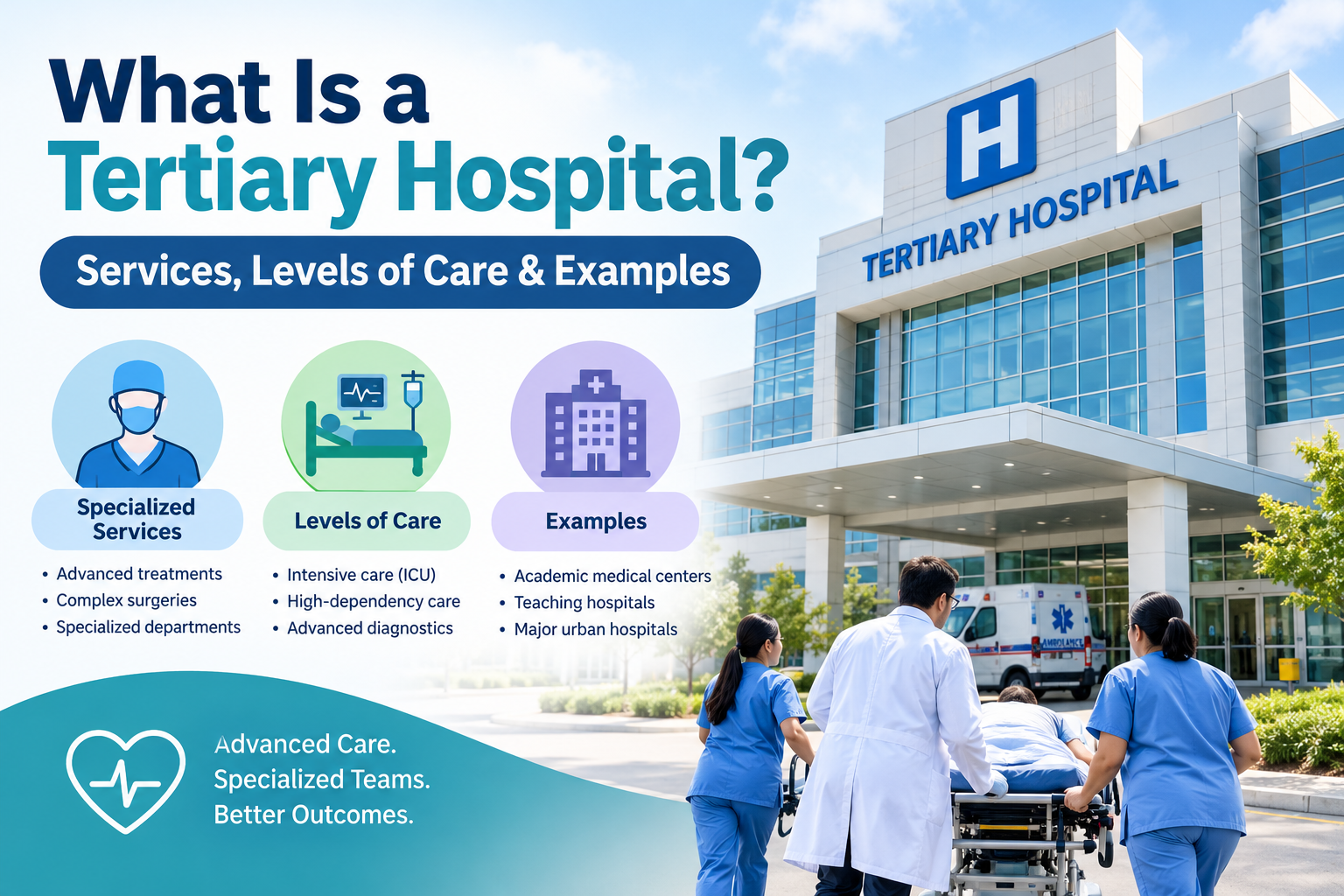
A tertiary hospital is a specialized healthcare facility that provides advanced medical care, complex treatments, and highly specialized services that are usually not available in smaller hospitals or clinics.
These hospitals typically have specialist doctors, advanced diagnostic equipment, intensive care units, surgical capabilities, and referral-based services for patients with serious or complicated medical conditions.
In simple terms:
Primary care treats common health problems. Secondary care provides specialist treatment. Tertiary care provides highly specialized and advanced medical services for complex conditions.
This guide explains what tertiary hospitals are, the services they offer, examples of tertiary care, and how they fit into the healthcare system.
What Is a Tertiary Hospital?
A tertiary hospital is a healthcare facility that provides the highest level of specialized medical care.
Patients are often referred to tertiary hospitals when they need treatments, procedures, or expertise that are not available at primary or secondary healthcare facilities.
Tertiary hospitals commonly provide:
- Advanced surgeries
- Specialized medical treatments
- Complex disease management
- Intensive care services
- Advanced imaging and diagnostics
- Specialist consultations
- Emergency trauma care
- Academic medical services
These hospitals usually serve a large geographic area and may receive patients from multiple cities or regions.
What Does Tertiary Care Mean?
Tertiary care refers to advanced medical services provided by highly trained specialists using sophisticated technology and equipment.
Unlike primary care, which focuses on general health needs, tertiary care focuses on complicated medical problems that require specialized expertise.
Examples of tertiary care include:
- Heart bypass surgery
- Organ transplantation
- Cancer treatment
- Neurosurgery
- Advanced trauma care
- Complex pediatric surgery
- Specialized rehabilitation
What Services Does a Tertiary Hospital Provide?
Tertiary hospitals offer a wide range of specialized services.
Advanced Surgical Services
Many tertiary hospitals perform complex surgeries such as:
- Brain surgery
- Heart surgery
- Spine surgery
- Organ transplant surgery
- Cancer-related operations
- Complex orthopedic procedures
These procedures require specialized surgeons, advanced equipment, and highly trained support teams.
Intensive Care Units (ICU)
Tertiary hospitals usually have advanced critical care facilities, including:
- Medical ICU
- Surgical ICU
- Cardiac ICU
- Neonatal ICU (NICU)
- Pediatric ICU (PICU)
ICU teams provide continuous monitoring and treatment for critically ill patients.
Specialized Medical Departments
A tertiary hospital may include specialists in areas such as:
- Cardiology
- Oncology
- Neurology
- Neurosurgery
- Nephrology
- Gastroenterology
- Endocrinology
- Pulmonology
- Rheumatology
- Infectious diseases
Advanced Diagnostic Services
Tertiary hospitals often provide advanced testing, including:
- MRI scans
- CT scans
- PET scans
- Specialized laboratory testing
- Genetic testing
- Cardiac imaging
- Advanced pathology services
Cancer Care
Many tertiary hospitals have comprehensive cancer centers offering:
- Cancer diagnosis
- Chemotherapy
- Radiation therapy
- Cancer surgery
- Oncology consultations
- Supportive care
Emergency and Trauma Care
Tertiary hospitals often manage severe emergencies such as:
- Major accidents
- Severe burns
- Multiple injuries
- Brain injuries
- Complex emergency surgeries
They usually have specialized trauma teams available.
Primary vs Secondary vs Tertiary Care
Healthcare systems are commonly organized into three levels:
- Primary care
- Secondary care
- Tertiary care
Each level provides different types of services.
| Level of Care | Main Purpose | Examples |
|---|---|---|
| Primary Care | First point of medical contact | Family doctors, clinics, general practitioners |
| Secondary Care | Specialist treatment after referral | Specialist clinics, district hospitals |
| Tertiary Care | Advanced treatment for complex conditions | University hospitals, specialized medical centers |
Primary Care Explained
Primary care is the first level of healthcare.
It focuses on:
- Preventive care
- Routine checkups
- Common illnesses
- Health education
- Basic treatments
Examples:
- Family doctors
- General practitioners
- Community health clinics
Common primary care services include:
- Vaccinations
- Blood pressure checks
- Minor injury treatment
- Routine health screenings
- Management of common conditions
Secondary Care Explained
Secondary care involves specialist medical services.
Patients are usually referred from primary care providers.
Examples of secondary care specialists:
- Cardiologists
- Dermatologists
- Orthopedic doctors
- Gastroenterologists
Secondary care may include:
- Specialist consultations
- Planned surgeries
- Hospital treatment
- Diagnostic procedures
Tertiary Care Explained
Tertiary care is the highest level of medical care.
It focuses on:
- Complex diseases
- Rare conditions
- Advanced procedures
- Specialized treatments
Patients are often referred from secondary care when their condition requires advanced expertise.
Examples include:
- Heart transplant programs
- Cancer centers
- Neurosurgery departments
- Advanced trauma centers
What Is the Difference Between a Hospital and a Tertiary Hospital?
Not every hospital is a tertiary hospital.
A general hospital may provide:
- Emergency care
- Basic surgery
- General medical treatment
- Routine inpatient services
A tertiary hospital provides:
- Highly specialized departments
- Advanced technology
- Complex procedures
- Subspecialist doctors
- Referral-based care
A tertiary hospital usually handles cases that require resources beyond standard hospital services.
Examples of Tertiary Hospitals
Examples of tertiary healthcare facilities include:
University Hospitals
These hospitals often combine:
- Patient care
- Medical education
- Research
They usually provide advanced treatments and train future healthcare professionals.
Specialized Medical Centers
Examples include:
- Cancer centers
- Heart institutes
- Transplant centers
- Neuroscience hospitals
These facilities focus on specific complex medical needs.
Major Referral Hospitals
Large regional hospitals often act as tertiary centers by accepting referrals from smaller facilities.
Who Needs Tertiary Hospital Care?
Patients may need tertiary care when they have:
- Complex diseases
- Rare medical conditions
- Serious injuries
- Conditions requiring specialist teams
- Failed treatment at lower levels of care
Examples include:
- Advanced cancer
- Severe heart disease
- Organ failure
- Complex neurological disorders
- High-risk pregnancies
How Do Patients Get Referred to a Tertiary Hospital?
Most patients do not directly start at tertiary care.
The usual pathway is:
Step 1: Primary Care Visit
A patient sees a general doctor for evaluation.
Step 2: Specialist Referral
If needed, the patient is referred to secondary care.
Step 3: Advanced Referral
If the condition requires highly specialized treatment, the patient may be referred to a tertiary hospital.
However, emergency situations may allow direct access to tertiary emergency departments.
Advantages of Tertiary Hospitals
Tertiary hospitals provide several benefits:
Access to Specialists
Patients can receive care from doctors with advanced training in specific medical fields.
Advanced Technology
These hospitals often have:
- Modern imaging systems
- Specialized surgical equipment
- Advanced monitoring systems
Multidisciplinary Care
Complex cases are often managed by teams of specialists working together.
For example, cancer patients may receive care from:
- Oncologists
- Surgeons
- Radiologists
- Pathologists
Research and Innovation
Many tertiary hospitals participate in:
- Clinical research
- Medical trials
- New treatment development
Challenges of Tertiary Hospitals
Although tertiary hospitals provide advanced care, they may have challenges:
Higher Costs
Advanced procedures and technology can make treatment more expensive.
Longer Waiting Times
Because they manage complex cases from large areas, waiting times may be longer.
Referral Requirements
Some services may require referral from another healthcare provider.
Tertiary Hospital vs Specialty Hospital
These terms are related but not identical.
| Tertiary Hospital | Specialty Hospital |
|---|---|
| Provides many advanced services | Focuses on one medical area |
| Multiple specialist departments | Narrow area of expertise |
| Treats complex conditions | Treats specific conditions |
| Often a referral center | May also be a referral center |
For example:
A university hospital may be a tertiary hospital with many departments, while a cancer institute may be a specialty hospital.
Tertiary Care Examples by Medical Field
Cardiology
- Heart surgery
- Cardiac catheterization
- Heart failure management
Oncology
- Chemotherapy
- Radiation therapy
- Cancer surgery
Neurology
- Brain surgery
- Stroke management
- Epilepsy treatment
Transplant Medicine
- Kidney transplant
- Liver transplant
- Heart transplant
Pediatrics
- Complex childhood diseases
- Neonatal intensive care
Frequently Asked Questions
What is a tertiary hospital?
A tertiary hospital is an advanced healthcare facility that provides specialized medical services, complex treatments, and care from highly trained specialists.
What is the difference between primary and tertiary care?
Primary care provides general medical services, while tertiary care provides advanced treatment for complex medical conditions.
Is a university hospital a tertiary hospital?
Many university hospitals are tertiary hospitals because they provide specialized care, research, and advanced medical training.
Why are patients referred to tertiary hospitals?
Patients are referred when they need specialized doctors, advanced technology, complex procedures, or treatments unavailable at lower healthcare levels.
What departments are found in tertiary hospitals?
Common departments include cardiology, oncology, neurology, surgery, intensive care, nephrology, and specialized diagnostic services.
Are all hospitals tertiary hospitals?
No. Hospitals vary by level of care. Some provide general services, while tertiary hospitals provide advanced specialized care.
What is tertiary care in healthcare?
Tertiary care is the highest level of healthcare focused on complex diseases, advanced procedures, and specialized medical expertise.
What is an example of tertiary care?
Examples include organ transplantation, cancer treatment, neurosurgery, and advanced cardiac surgery.
Final Thoughts
A tertiary hospital is a healthcare facility designed to provide advanced and specialized medical care for complex conditions.
While primary care handles everyday health needs and secondary care provides specialist treatment, tertiary hospitals offer the highest level of medical expertise, technology, and resources.
Patients are often referred to tertiary hospitals when they require advanced procedures, specialized teams, or treatments that are not available at smaller healthcare facilities.
Understanding the difference between healthcare levels can help patients know where to seek the right type of medical care.
This article is for educational purposes only and does not replace professional medical advice.
This guide is general education and is not medical, legal or career advice. Entry rules, fees, training lengths and treatment guidance change, so confirm them with the official body in your country or with your own doctor or pharmacist. Read our disclaimer. Found an error? Tell us.