Home / Guides / Learning medicine
Symptoms of Too Much Blood Pressure Medication: Signs & What To Do
Learn the symptoms of too much blood pressure medication, including dizziness, fainting, low BP signs, causes, overdose risks, and when to seek medical help.
On this page (51 sections)
- What Happens If You Take Too Much Blood Pressure Medication?
- Common Symptoms of Too Much Blood Pressure Medication
- 1. Dizziness or Lightheadedness
- 2. Feeling Faint or Fainting
- 3. Extreme Weakness and Fatigue
- 4. Blurred Vision
- 5. Confusion or Trouble Concentrating
- 6. Nausea
- 7. Cold, Clammy Skin
- 8. Slow Heart Rate
- What Blood Pressure Is Too Low From Medication?
- Why Can Blood Pressure Medication Become Too Strong?
- Weight Loss
- Dehydration
- Dietary Changes
- Aging
- New Medications
- Kidney Function Changes
- Types of Blood Pressure Medications That Can Cause Low Blood Pressure
- ACE Inhibitors
- Angiotensin Receptor Blockers (ARBs)
- Calcium Channel Blockers
- Beta Blockers
- Diuretics (Water Pills)
- Signs Your Blood Pressure Medication May Be Too Strong
- What Happens If You Accidentally Take Too Much Blood Pressure Medication?
- When Is Too Much Blood Pressure Medication an Emergency?
- Should You Stop Taking Blood Pressure Medication If Your BP Is Low?
- How Doctors Adjust Blood Pressure Medication
- Blood Pressure Records
- Symptoms
- Current Medications
- Health Changes
- How To Prevent Blood Pressure From Dropping Too Low
- Monitor Your Blood Pressure Regularly
- Stay Hydrated
- Stand Up Slowly
- Take Medication Exactly as Prescribed
- Review Medications Regularly
- Too Much Blood Pressure Medication vs Normal Side Effects
- Frequently Asked Questions
- What are the symptoms of too much blood pressure medication?
- Can blood pressure medication lower your blood pressure too much?
- How do I know if my blood pressure medicine is too strong?
- Can too much blood pressure medicine cause dizziness?
- What happens if I accidentally take two blood pressure pills?
- Should I stop my blood pressure medication if I feel dizzy?
- What blood pressure is too low?
- Can blood pressure medication cause fainting?
- How long do symptoms from too much blood pressure medication last?
- Final Thoughts
If you take medication for high blood pressure, you may wonder what happens if your dose becomes too strong or your blood pressure drops too low.
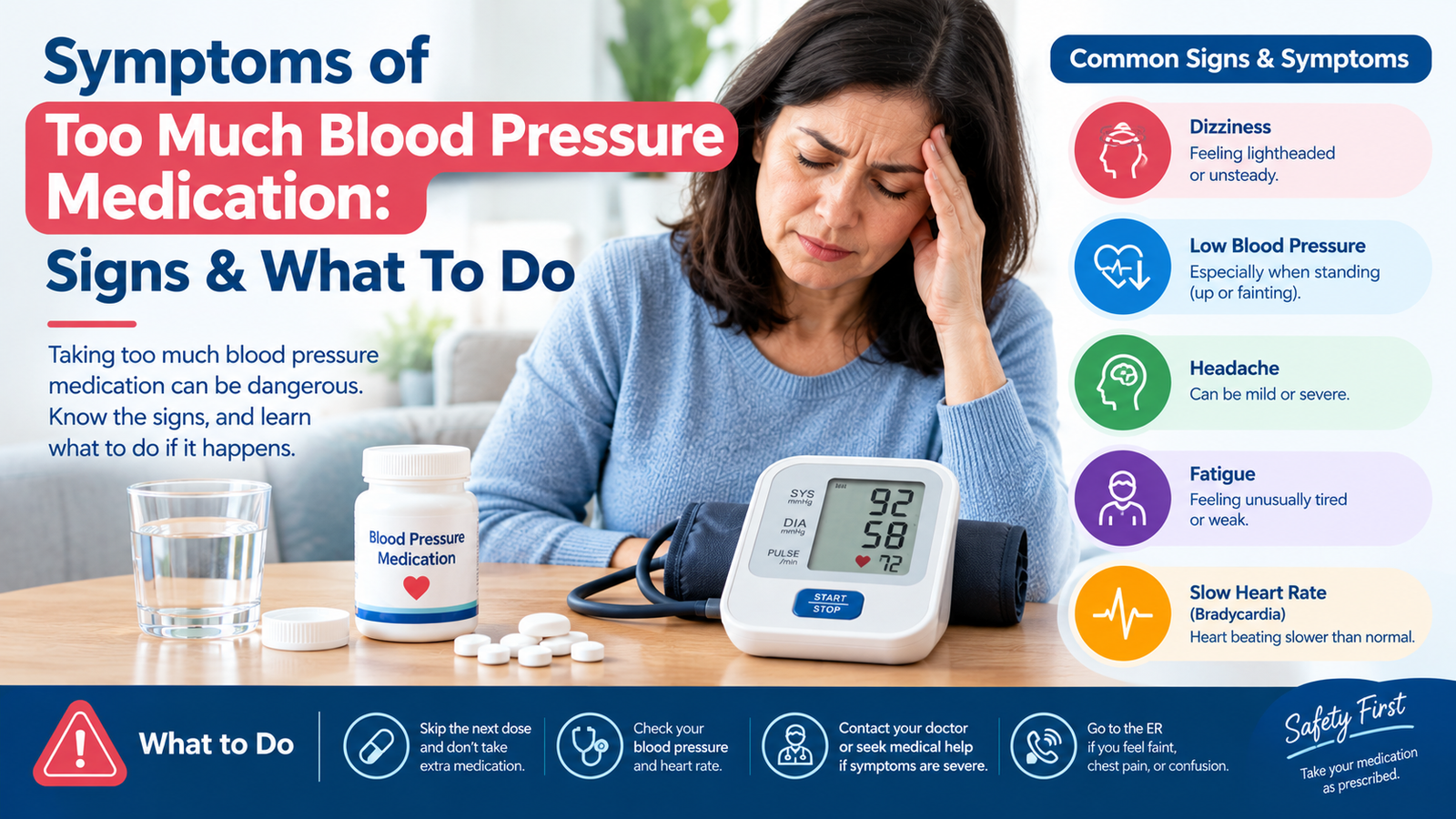
The symptoms of too much blood pressure medication usually happen because the medicine lowers your blood pressure more than your body needs. Common signs include dizziness, lightheadedness, weakness, fatigue, fainting, blurred vision, confusion, and feeling unsteady when standing.
Blood pressure medication is designed to reduce high blood pressure, but taking too much, having a dose that is no longer appropriate, becoming dehydrated, or experiencing changes in your health can sometimes cause low blood pressure (hypotension).
It is important not to stop or change your medication without speaking with a healthcare professional. A doctor can adjust your treatment safely based on your blood pressure readings, symptoms, and overall health.
This guide explains the warning signs of excessive blood pressure medication, why it happens, what blood pressure may be too low, what to do if you accidentally take an extra dose, and when to seek emergency care.
What Happens If You Take Too Much Blood Pressure Medication?
Blood pressure medications work by relaxing blood vessels, reducing fluid buildup, slowing heart rate, or decreasing the force of the heartbeat.
Taking too much medication can cause your blood pressure to fall below a healthy level.
When blood pressure becomes too low, your body may not deliver enough blood flow to important organs, including your brain and heart.
This can lead to symptoms such as:
- Dizziness
- Feeling faint
- Weakness
- Confusion
- Blurred vision
- Extreme tiredness
- Falls
- Fainting
The severity depends on:
- The type of medication
- The amount taken
- Your age
- Your health conditions
- Other medicines you use
- Your hydration level
Common Symptoms of Too Much Blood Pressure Medication
1. Dizziness or Lightheadedness
Dizziness is one of the most common signs that your blood pressure may be too low.
You may notice:
- Feeling unsteady
- Feeling like the room is spinning
- Lightheadedness when standing
- Trouble maintaining balance
This often happens because blood pressure drops suddenly when you change positions.
This condition is called orthostatic hypotension.
2. Feeling Faint or Fainting
If blood pressure becomes too low, your brain may temporarily receive less blood flow.
Signs include:
- Feeling like you may pass out
- Weakness before fainting
- Blacking out briefly
- Falling after standing
Fainting after taking blood pressure medication should be discussed with a healthcare professional because it may indicate that your medication needs adjustment.
3. Extreme Weakness and Fatigue
Too much blood pressure medication may leave you feeling unusually tired.
You may experience:
- Low energy
- Muscle weakness
- Difficulty completing normal activities
- Feeling exhausted despite enough sleep
This can happen when your body is not receiving enough blood pressure support.
4. Blurred Vision
Low blood pressure can affect blood flow to the eyes and brain.
Possible symptoms include:
- Blurry vision
- Temporary vision changes
- Difficulty focusing
Sudden or severe vision changes require medical attention.
5. Confusion or Trouble Concentrating
A significant drop in blood pressure can affect brain function.
You may notice:
- Confusion
- Difficulty thinking clearly
- Trouble concentrating
- Feeling mentally slow
Older adults may be more sensitive to these effects.
6. Nausea
Some people experience nausea when their blood pressure becomes too low.
It may occur with:
- Dizziness
- Weakness
- Sweating
- Feeling faint
7. Cold, Clammy Skin
A significant blood pressure drop may activate your body's stress response.
Possible signs include:
- Cold skin
- Pale appearance
- Sweating
- Feeling weak
8. Slow Heart Rate
Some blood pressure medications can slow the heartbeat.
This is especially associated with certain medications such as beta blockers.
Symptoms of a slow heart rate may include:
- Fatigue
- Weakness
- Dizziness
- Shortness of breath
What Blood Pressure Is Too Low From Medication?
There is no single blood pressure number that is too low for everyone.
However, blood pressure below:
90/60 mmHg
is commonly considered low blood pressure.
Some people naturally have lower blood pressure without symptoms.
Doctors are usually more concerned when low readings are combined with symptoms such as:
- Dizziness
- Fainting
- Confusion
- Weakness
- Chest discomfort
Your healthcare provider will consider both your numbers and how you feel.
Why Can Blood Pressure Medication Become Too Strong?
A medication dose that was previously appropriate may become too strong because your health situation changes.
Common reasons include:
Weight Loss
Losing weight can lower blood pressure, meaning your previous medication dose may become excessive.
Dehydration
Fluid loss from:
- Vomiting
- Diarrhea
- Fever
- Excessive sweating
can lower blood pressure and make medications feel stronger.
Dietary Changes
Reducing salt intake or changing your diet significantly can affect blood pressure levels.
Aging
Older adults may become more sensitive to blood pressure medications.
New Medications
Some medicines can interact with blood pressure drugs.
Examples include:
- Diuretics
- Certain antidepressants
- Some pain medications
- Other heart medications
Kidney Function Changes
The kidneys help regulate fluid balance and blood pressure.
Changes in kidney function can affect how some medications work.
Types of Blood Pressure Medications That Can Cause Low Blood Pressure
Different types of hypertension medications work in different ways.
ACE Inhibitors
Examples:
- Lisinopril
- Enalapril
These relax blood vessels to lower blood pressure.
Too much may contribute to:
- Dizziness
- Low blood pressure
- Weakness
Angiotensin Receptor Blockers (ARBs)
Examples:
- Losartan
- Valsartan
These medications also relax blood vessels.
Possible signs of excessive effect include:
- Lightheadedness
- Fatigue
- Low blood pressure
Calcium Channel Blockers
Examples:
- Amlodipine
- Diltiazem
These help relax blood vessels and may affect heart rate.
Too much may cause:
- Dizziness
- Weakness
- Swelling
- Low blood pressure
Beta Blockers
Examples:
- Metoprolol
- Atenolol
These reduce heart rate and the workload on the heart.
Too much may cause:
- Slow heartbeat
- Fatigue
- Dizziness
- Weakness
Diuretics (Water Pills)
Examples:
- Hydrochlorothiazide
- Furosemide
These reduce excess fluid in the body.
Too much may lead to:
- Dehydration
- Low blood pressure
- Electrolyte problems
- Dizziness
Signs Your Blood Pressure Medication May Be Too Strong
Your medication may need review if you frequently experience:
- Dizziness after taking your pill
- Fainting episodes
- Unusual tiredness
- Low blood pressure readings
- Falls
- Weakness
- Symptoms when standing up
- Feeling better when you skip medication
Do not stop medication on your own. Contact your healthcare provider for advice.
What Happens If You Accidentally Take Too Much Blood Pressure Medication?
If you accidentally take an extra dose:
- Do not panic.
- Check the medication name and dose.
- Contact your healthcare provider or pharmacist for guidance.
- Monitor yourself for symptoms.
Seek urgent medical help if you experience:
- Fainting
- Severe dizziness
- Chest pain
- Difficulty breathing
- Confusion
- Severe weakness
- Loss of consciousness
The seriousness depends on:
- Which medication was taken
- How much was taken
- Your medical history
When Is Too Much Blood Pressure Medication an Emergency?
Seek emergency care if you have:
- Passing out
- Severe confusion
- Trouble breathing
- Chest pain
- Seizures
- Very slow heartbeat
- Severe weakness
- Unresponsiveness
A severe drop in blood pressure can require immediate treatment.
Should You Stop Taking Blood Pressure Medication If Your BP Is Low?
Do not stop blood pressure medication without medical advice.
Stopping suddenly can cause your blood pressure to rise again or create other risks.
Instead:
- Record your blood pressure readings
- Note your symptoms
- Contact your healthcare provider
Your doctor may adjust:
- Dose
- Medication type
- Timing of doses
- Combination therapy
How Doctors Adjust Blood Pressure Medication
A healthcare provider may review:
Blood Pressure Records
Home readings help identify patterns.
Symptoms
Your doctor will consider how you feel, not just the numbers.
Current Medications
They may adjust:
- Dose amount
- Number of medications
- Timing
Health Changes
They may consider:
- Weight changes
- Kidney function
- Lifestyle changes
- New illnesses
How To Prevent Blood Pressure From Dropping Too Low
You can reduce the risk of medication-related low blood pressure by:
Monitor Your Blood Pressure Regularly
Keep track of:
- Morning readings
- Evening readings
- Symptoms
Stay Hydrated
Adequate fluids help maintain healthy blood pressure.
Stand Up Slowly
Especially if you experience dizziness.
Move gradually from:
- Lying down
- Sitting
- Standing
Take Medication Exactly as Prescribed
Avoid:
- Double doses
- Skipping doses without advice
- Changing timing without approval
Review Medications Regularly
Your healthcare needs may change over time.
Regular medication reviews help ensure your treatment remains appropriate.
Too Much Blood Pressure Medication vs Normal Side Effects
Not every side effect means your dose is too high.
Some medication side effects can occur even at the correct dose.
| Symptom | Possible Cause |
|---|---|
| Mild dizziness | Medication adjustment or low BP |
| Severe fainting | Possible excessive blood pressure lowering |
| Fatigue | Medication effect or other causes |
| Swelling | Certain medication side effects |
| Slow heartbeat | Possible beta blocker effect |
Always discuss concerning symptoms with your healthcare provider.
Frequently Asked Questions
What are the symptoms of too much blood pressure medication?
Common symptoms include dizziness, lightheadedness, weakness, fatigue, fainting, blurred vision, confusion, and low blood pressure readings.
Can blood pressure medication lower your blood pressure too much?
Yes. If the dose is too high or your health changes, blood pressure medication can sometimes lower blood pressure more than intended.
How do I know if my blood pressure medicine is too strong?
Signs may include frequent dizziness, fainting, very low readings, weakness, and feeling unwell after taking medication.
Can too much blood pressure medicine cause dizziness?
Yes. Dizziness is one of the most common symptoms of blood pressure dropping too low.
What happens if I accidentally take two blood pressure pills?
The effect depends on the medication and dose. Contact a healthcare professional for advice, especially if symptoms develop.
Should I stop my blood pressure medication if I feel dizzy?
No. Contact your healthcare provider before making changes.
What blood pressure is too low?
A reading below 90/60 mmHg is often considered low, but symptoms are important when deciding whether it is concerning.
Can blood pressure medication cause fainting?
Yes. If medication lowers blood pressure too much, fainting may occur.
How long do symptoms from too much blood pressure medication last?
The duration depends on the medication, dose, and your body's response. Medical advice may be needed.
Final Thoughts
The symptoms of too much blood pressure medication usually occur when your blood pressure drops lower than your body needs.
Common warning signs include dizziness, weakness, fatigue, blurred vision, confusion, and fainting.
If you experience these symptoms, do not adjust or stop your medication without speaking with a healthcare professional. A doctor can safely review your blood pressure readings, medications, and health changes to determine whether your treatment needs adjustment.
Managing high blood pressure is a balance—your medication should lower your blood pressure while keeping you feeling healthy and stable.
This article is for educational purposes only and is not a substitute for professional medical advice, diagnosis, or treatment.
This guide is general education and is not medical, legal or career advice. Entry rules, fees, training lengths and treatment guidance change, so confirm them with the official body in your country or with your own doctor or pharmacist. Read our disclaimer. Found an error? Tell us.