Home / Guides / Learning medicine
Does Semaglutide Cause Heartburn? Acid Reflux Side Effects Explained
Does semaglutide cause heartburn? Learn why semaglutide may cause acid reflux, Ozempic and Wegovy side effects, symptoms, and ways to reduce discomfort.
On this page (41 sections)
- Can Semaglutide Cause Heartburn?
- Why Does Semaglutide Cause Heartburn?
- Semaglutide Slows Stomach Emptying
- Larger Feeling of Fullness After Meals
- Changes During Dose Increases
- Does Ozempic Cause Heartburn?
- Does Wegovy Cause Heartburn?
- Does Rybelsus Cause Heartburn?
- Common Digestive Side Effects of Semaglutide
- Nausea
- Vomiting
- Constipation
- Diarrhea
- Bloating and Gas
- Indigestion
- How Long Does Semaglutide Heartburn Last?
- How To Reduce Heartburn While Taking Semaglutide
- 1. Eat Smaller Meals
- 2. Avoid Lying Down After Eating
- 3. Identify Trigger Foods
- 4. Eat Slowly
- 5. Stay Hydrated
- 6. Avoid Late-Night Meals
- Foods That May Be Easier on Your Stomach While Taking Semaglutide
- Should You Stop Semaglutide If You Have Heartburn?
- Can Semaglutide Make GERD Worse?
- Who May Be More Likely to Experience Heartburn With Semaglutide?
- When Should You Contact a Doctor?
- Severe Symptoms That Need Urgent Medical Attention
- Semaglutide Heartburn vs Normal Acid Reflux
- Frequently Asked Questions
- Does semaglutide cause heartburn?
- Can semaglutide cause acid reflux?
- Why does semaglutide cause heartburn?
- Does Ozempic cause heartburn?
- Does Wegovy cause acid reflux?
- How can I stop heartburn from semaglutide?
- How long does semaglutide heartburn last?
- Should I stop taking semaglutide because of heartburn?
- Can people with GERD take semaglutide?
- Final Thoughts
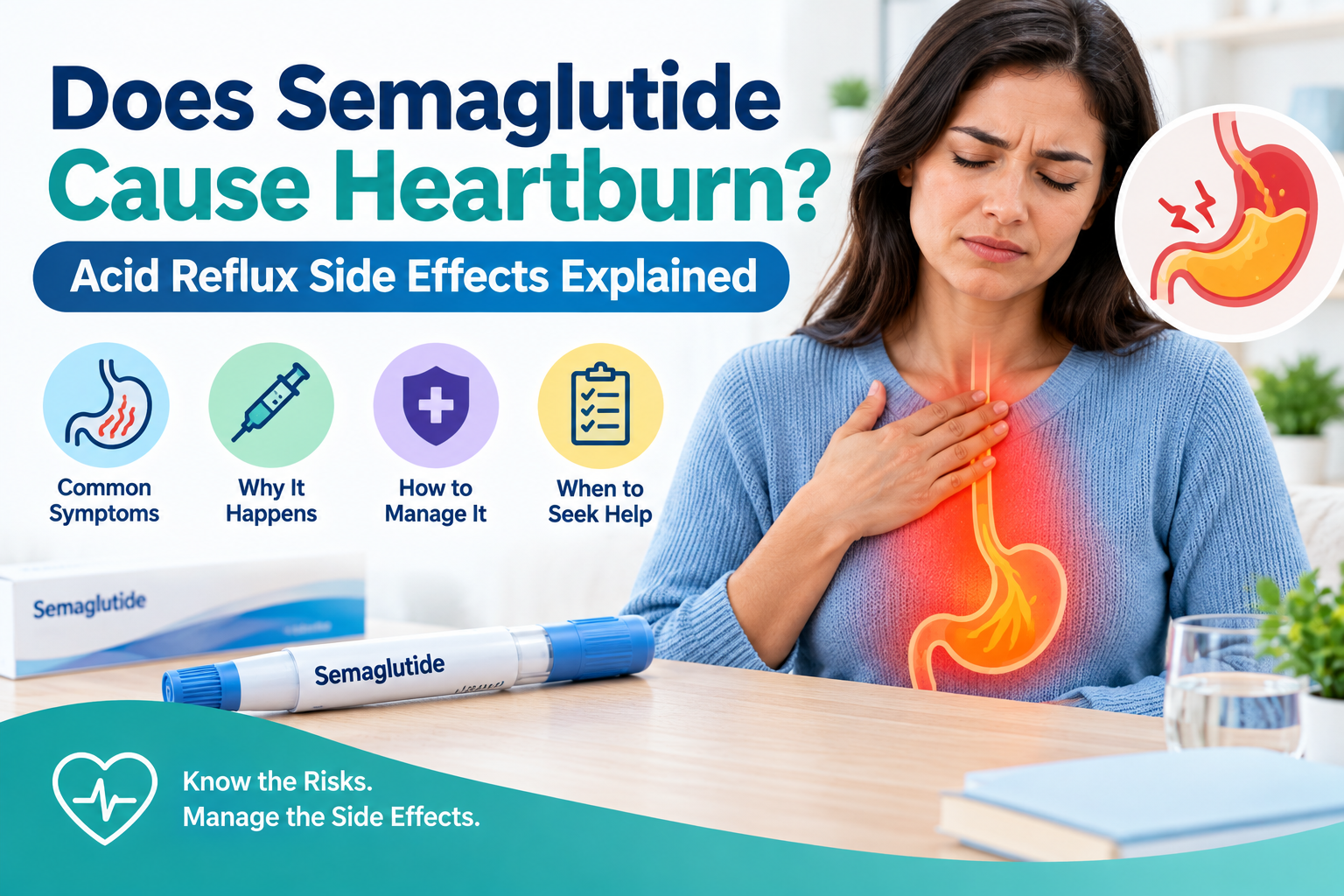
If you are wondering does semaglutide cause heartburn, the answer is yes, semaglutide may cause heartburn or worsen acid reflux symptoms in some people.
Semaglutide is a medication in a class called GLP-1 receptor agonists and is commonly prescribed for type 2 diabetes and weight management. While it can provide significant health benefits, it may also cause digestive side effects because it changes how quickly food moves through your stomach.
Common digestive side effects of semaglutide include:
- Nausea
- Heartburn
- Acid reflux
- Bloating
- Indigestion
- Burping
- Constipation
- Vomiting
- Stomach discomfort
Semaglutide-related heartburn is usually mild and may improve as your body adjusts to the medication. However, persistent, severe, or worsening symptoms should be discussed with a healthcare professional.
This guide explains why semaglutide can cause heartburn, which medications are associated with reflux symptoms, how to reduce discomfort, and when to seek medical advice.
Can Semaglutide Cause Heartburn?
Yes, semaglutide can cause heartburn in some people.
Heartburn happens when stomach acid moves upward into the esophagus, causing a burning sensation in the chest or throat.
Semaglutide may contribute to heartburn because it affects the digestive system, especially the movement of food through the stomach.
People taking semaglutide may experience:
- Burning sensation in the chest
- Sour taste in the mouth
- Acid coming back into the throat
- Burping
- Feeling overly full after meals
- Stomach discomfort
Not everyone taking semaglutide will experience heartburn. Some people may have no digestive symptoms at all.
Why Does Semaglutide Cause Heartburn?
The main reason semaglutide may trigger heartburn is its effect on digestion.
Semaglutide Slows Stomach Emptying
One of the effects of semaglutide is delayed gastric emptying, which means food leaves the stomach more slowly.
This can help people feel full longer, which may support weight loss.
However, slower digestion may also cause:
- Increased stomach fullness
- Pressure inside the stomach
- Bloating
- Nausea
- Reflux symptoms
When stomach contents remain longer, some people may be more likely to experience acid reflux.
Larger Feeling of Fullness After Meals
Because semaglutide reduces appetite and slows digestion, normal meal portions may sometimes feel too large.
Eating more than your stomach comfortably handles may increase:
- Stomach pressure
- Burping
- Acid reflux
- Heartburn
Changes During Dose Increases
Heartburn and digestive symptoms are often more noticeable when:
- Starting semaglutide
- Increasing the dose
- Adjusting to a new strength
The body may need time to adapt to changes in digestion.
Does Ozempic Cause Heartburn?
Yes, Ozempic (semaglutide) may cause heartburn or acid reflux in some users.
Ozempic is a GLP-1 receptor agonist used mainly for managing type 2 diabetes.
Reported digestive side effects may include:
- Nausea
- Vomiting
- Abdominal discomfort
- Constipation
- Indigestion
- Heartburn
If heartburn becomes severe or affects your daily life, discuss it with your healthcare provider.
Does Wegovy Cause Heartburn?
Yes, Wegovy (semaglutide) can cause heartburn in some people.
Wegovy contains semaglutide and is approved for chronic weight management.
Because it affects digestion and appetite, some users may experience:
- Acid reflux
- Feeling full quickly
- Burping
- Bloating
- Indigestion
These symptoms may improve as your body becomes accustomed to the medication.
Does Rybelsus Cause Heartburn?
Yes, Rybelsus (oral semaglutide) may also cause digestive side effects, including heartburn or indigestion.
Although Rybelsus is taken by mouth instead of injection, it contains the same active ingredient: semaglutide.
Possible digestive effects include:
- Nausea
- Stomach discomfort
- Acid reflux symptoms
- Reduced appetite
- Bloating
Common Digestive Side Effects of Semaglutide
Semaglutide affects the digestive system, so stomach-related side effects are among the most commonly reported.
Common symptoms include:
Nausea
Nausea is one of the most common side effects, especially when beginning treatment.
Vomiting
Some people may experience vomiting, particularly after dose increases.
Constipation
Slower digestion can contribute to constipation.
Diarrhea
Some people experience changes in bowel movements.
Bloating and Gas
Delayed stomach emptying may cause:
- Feeling bloated
- Increased gas
- Abdominal pressure
Indigestion
Some people experience:
- Feeling overly full
- Stomach discomfort
- Burping
- Heartburn
How Long Does Semaglutide Heartburn Last?
The duration of semaglutide-related heartburn varies between individuals.
For many people:
- Symptoms appear after starting treatment
- Symptoms may increase after dose changes
- The body may adjust over time
Heartburn may improve after several weeks as digestion adapts.
However, if symptoms:
- Continue for a long time
- Become severe
- Interfere with eating
- Affect sleep
you should contact your healthcare provider.
How To Reduce Heartburn While Taking Semaglutide
There are several lifestyle strategies that may help reduce reflux symptoms.
1. Eat Smaller Meals
Large meals can increase stomach pressure.
Try:
- Smaller portions
- Eating slowly
- Avoiding overeating
2. Avoid Lying Down After Eating
Remaining upright after meals may reduce acid reflux.
Try waiting at least a few hours before lying down.
3. Identify Trigger Foods
Certain foods may worsen heartburn.
Common triggers include:
- Spicy foods
- Fatty foods
- Fried foods
- Chocolate
- Coffee
- Alcohol
- Carbonated drinks
- Acidic foods
Triggers vary between individuals.
4. Eat Slowly
Eating quickly may increase:
- Air swallowing
- Bloating
- Stomach discomfort
Slow eating gives your body more time to recognize fullness.
5. Stay Hydrated
Adequate hydration supports healthy digestion.
However, avoid drinking very large amounts during meals if it increases fullness or discomfort.
6. Avoid Late-Night Meals
Eating close to bedtime may increase reflux symptoms.
Try finishing meals several hours before lying down.
Foods That May Be Easier on Your Stomach While Taking Semaglutide
Some people find these foods easier to tolerate:
- Lean proteins
- Vegetables
- Whole grains
- Smaller meals
- Low-fat foods
- Simple foods during periods of nausea
Your ideal diet depends on your individual health needs.
Should You Stop Semaglutide If You Have Heartburn?
Do not stop semaglutide without speaking with your healthcare provider.
Your doctor may recommend:
- Adjusting the dose
- Changing the timing
- Reviewing other medications
- Managing reflux symptoms separately
Stopping medication suddenly without medical guidance may affect diabetes or weight management goals.
Can Semaglutide Make GERD Worse?
Semaglutide may worsen GERD symptoms in some people.
GERD (gastroesophageal reflux disease) is a condition where stomach acid repeatedly flows back into the esophagus.
People with GERD may notice:
- More frequent heartburn
- Increased reflux after meals
- More bloating
- Greater discomfort after eating
If you already have GERD, discuss semaglutide use with your healthcare provider.
Who May Be More Likely to Experience Heartburn With Semaglutide?
Some people may have a higher chance of digestive symptoms.
Factors may include:
- History of acid reflux
- GERD
- Sensitive digestion
- Rapid dose increases
- Eating large meals
- High-fat foods
When Should You Contact a Doctor?
Contact your healthcare provider if you experience:
- Severe or persistent heartburn
- Difficulty swallowing
- Ongoing vomiting
- Severe abdominal pain
- Signs of dehydration
- Symptoms that interfere with eating
These symptoms may require medical evaluation.
Severe Symptoms That Need Urgent Medical Attention
Seek urgent medical help for symptoms such as:
- Severe abdominal pain
- Persistent vomiting
- Chest pain
- Difficulty breathing
- Signs of a serious allergic reaction
Do not assume severe symptoms are only medication side effects.
Semaglutide Heartburn vs Normal Acid Reflux
| Symptom | Possible Explanation |
|---|---|
| Mild burning after meals | Possible reflux symptom |
| Burping and fullness | Slower digestion |
| Nausea after injection | Common digestive effect |
| Persistent severe pain | Needs medical evaluation |
| Difficulty swallowing | Requires medical advice |
Frequently Asked Questions
Does semaglutide cause heartburn?
Yes. Semaglutide can cause heartburn or acid reflux symptoms in some people because it slows stomach emptying and affects digestion.
Can semaglutide cause acid reflux?
Yes. Some people taking semaglutide experience acid reflux, indigestion, or heartburn.
Why does semaglutide cause heartburn?
Semaglutide slows stomach emptying, which may increase stomach fullness and pressure, contributing to reflux symptoms.
Does Ozempic cause heartburn?
Yes. Ozempic contains semaglutide and may cause digestive side effects, including heartburn, nausea, and indigestion.
Does Wegovy cause acid reflux?
Yes. Wegovy may cause acid reflux symptoms in some people because it affects digestion.
How can I stop heartburn from semaglutide?
Eating smaller meals, avoiding trigger foods, staying upright after eating, and discussing symptoms with your healthcare provider may help.
How long does semaglutide heartburn last?
Many people notice improvement as their body adjusts, but persistent symptoms should be discussed with a healthcare professional.
Should I stop taking semaglutide because of heartburn?
Do not stop semaglutide without medical advice. Your provider can help manage side effects safely.
Can people with GERD take semaglutide?
Some people with GERD can take semaglutide, but they should discuss their condition and symptoms with their healthcare provider.
Final Thoughts
So, does semaglutide cause heartburn?
Yes, semaglutide may cause heartburn and acid reflux symptoms in some people. This happens mainly because the medication slows stomach emptying and changes how the digestive system processes food.
Mild digestive symptoms often improve as your body adjusts, especially after starting treatment or increasing the dose.
If you experience persistent or severe heartburn while taking semaglutide, speak with your healthcare provider. They can help determine whether your symptoms are medication-related and recommend safe ways to manage them.
This article is for educational purposes only and is not a substitute for professional medical advice, diagnosis, or treatment.
This guide is general education and is not medical, legal or career advice. Entry rules, fees, training lengths and treatment guidance change, so confirm them with the official body in your country or with your own doctor or pharmacist. Read our disclaimer. Found an error? Tell us.