Home / Guides / Learning medicine
High Blood Pressure Stage 1: Symptoms, Numbers & Treatment
Learn what high blood pressure stage 1 means, including BP numbers, symptoms, causes, risks, treatment options, and natural ways to lower hypertension.
On this page (47 sections)
- What Is High Blood Pressure Stage 1?
- What Blood Pressure Numbers Are Considered Stage 1 Hypertension?
- What Does a Stage 1 Hypertension Reading Look Like?
- Is Stage 1 High Blood Pressure Serious?
- Does Stage 1 Hypertension Have Symptoms?
- Possible Symptoms of Very High Blood Pressure
- What Causes Stage 1 High Blood Pressure?
- Age
- Family History
- High Sodium Intake
- Lack of Physical Activity
- Being Overweight
- Stress
- Smoking
- Alcohol Consumption
- Certain Medical Conditions
- Stage 1 Hypertension Risk Factors
- How Is Stage 1 High Blood Pressure Diagnosed?
- Multiple Blood Pressure Readings
- Medical History Review
- Physical Examination
- Additional Tests
- Stage 1 Hypertension Treatment
- Lifestyle Changes
- How To Lower Stage 1 High Blood Pressure Naturally
- Follow a Heart-Healthy Diet
- Reduce Salt Intake
- Exercise Regularly
- Maintain a Healthy Weight
- Stop Smoking
- Limit Alcohol
- Manage Stress
- Do You Need Medication for Stage 1 Hypertension?
- Stage 1 Hypertension vs Stage 2 Hypertension
- Can Stage 1 Hypertension Be Reversed?
- How Often Should You Check Blood Pressure?
- When Should You Seek Medical Help?
- Frequently Asked Questions
- What is considered stage 1 high blood pressure?
- Is stage 1 hypertension dangerous?
- Can stage 1 high blood pressure go away?
- Does stage 1 hypertension require medication?
- What should I do if my blood pressure is 130/80?
- Can stress cause stage 1 hypertension?
- What foods should I avoid with stage 1 hypertension?
- How can I lower stage 1 blood pressure naturally?
- Final Thoughts
If you have been told you have high blood pressure stage 1, you may wonder what it means, how serious it is, and what steps you should take next.
Stage 1 hypertension is an early stage of high blood pressure where your blood pressure readings are consistently above the normal range but not yet considered severe hypertension. Although it may not cause noticeable symptoms, untreated stage 1 high blood pressure can increase your risk of heart disease, stroke, kidney problems, and other health complications over time.
The good news is that stage 1 hypertension can often be managed effectively through lifestyle changes, regular monitoring, and medication when recommended by a healthcare professional.
This guide explains what stage 1 high blood pressure means, the blood pressure numbers involved, symptoms, causes, risks, diagnosis, and ways to lower your blood pressure naturally.
What Is High Blood Pressure Stage 1?
High blood pressure stage 1, also called stage 1 hypertension, is a condition where your blood pressure readings consistently fall within the stage 1 hypertension range.
Blood pressure measures the force of blood pushing against the walls of your arteries.
It is recorded using two numbers:
- Systolic blood pressure: The top number, showing pressure when your heart beats
- Diastolic blood pressure: The bottom number, showing pressure when your heart rests between beats
A blood pressure reading is written like:
120/80 mmHg
For stage 1 hypertension, the systolic or diastolic number is higher than the healthy range.
What Blood Pressure Numbers Are Considered Stage 1 Hypertension?
According to commonly used adult blood pressure guidelines:
| Blood Pressure Category | Systolic (Top Number) | Diastolic (Bottom Number) |
|---|---|---|
| Normal | Less than 120 mmHg | Less than 80 mmHg |
| Elevated | 120–129 mmHg | Less than 80 mmHg |
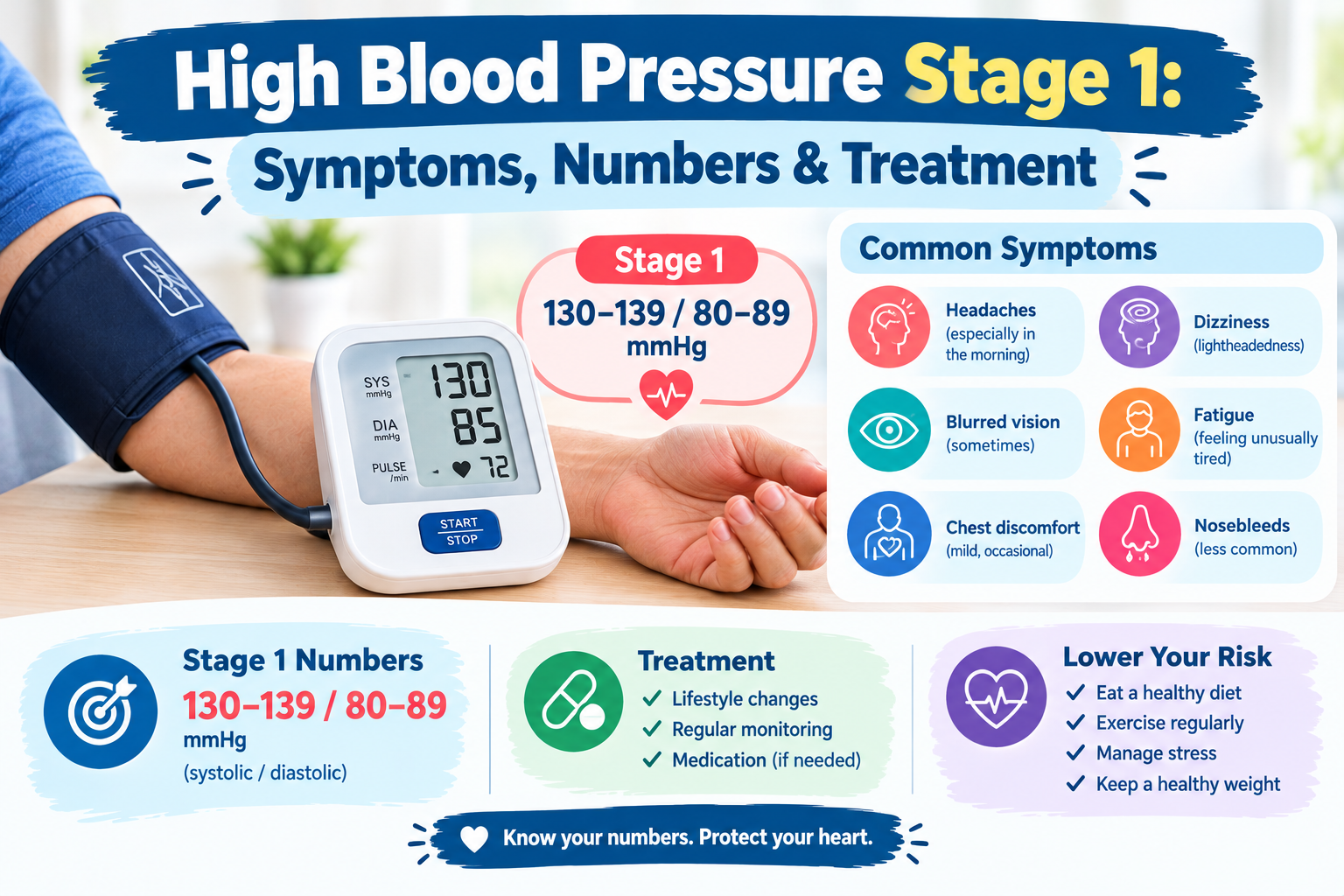
| Stage 1 Hypertension | 130–139 mmHg | 80–89 mmHg |
| Stage 2 Hypertension | 140 mmHg or higher | 90 mmHg or higher |
| Hypertensive Crisis | Higher than 180 mmHg | Higher than 120 mmHg |
A single high reading does not always mean you have hypertension. Healthcare providers usually look at multiple readings over time.
What Does a Stage 1 Hypertension Reading Look Like?
Examples of stage 1 high blood pressure readings include:
- 130/82 mmHg
- 135/85 mmHg
- 138/88 mmHg
If your readings repeatedly fall within this range, your healthcare provider may diagnose stage 1 hypertension.
Blood pressure can naturally change throughout the day because of:
- Stress
- Physical activity
- Caffeine
- Sleep
- Illness
- Medications
That is why repeated measurements are important.
Is Stage 1 High Blood Pressure Serious?
Stage 1 hypertension is considered an early stage, but it should not be ignored.
Over time, high blood pressure can damage blood vessels and increase the workload on your heart.
Possible long-term risks include:
- Heart disease
- Heart attack
- Stroke
- Kidney disease
- Vision problems
- Blood vessel damage
- Cognitive decline
Managing blood pressure early can significantly reduce these risks.
Does Stage 1 Hypertension Have Symptoms?
Most people with stage 1 high blood pressure have no symptoms.
This is why hypertension is often called a “silent condition.”
Many people discover they have high blood pressure during:
- Routine checkups
- Workplace health screenings
- Medical visits for another reason
Even without symptoms, high blood pressure can still affect your health.
Possible Symptoms of Very High Blood Pressure
Stage 1 hypertension usually does not cause symptoms.
However, extremely high blood pressure may be associated with symptoms such as:
- Severe headache
- Chest pain
- Shortness of breath
- Vision changes
- Confusion
- Weakness
- Dizziness
Seek urgent medical care if you experience severe symptoms with very high blood pressure readings.
What Causes Stage 1 High Blood Pressure?
High blood pressure usually develops from a combination of genetic, lifestyle, and health factors.
Common causes and risk factors include:
Age
Blood pressure often increases as people get older because arteries may become less flexible.
Family History
Having close relatives with hypertension can increase your risk.
High Sodium Intake
Eating too much salt can cause the body to retain fluid, increasing blood pressure.
Common sources include:
- Processed foods
- Fast food
- Packaged snacks
- Canned foods
Lack of Physical Activity
Regular movement helps maintain healthy blood vessels and heart function.
A sedentary lifestyle can increase hypertension risk.
Being Overweight
Extra body weight can increase the pressure placed on the cardiovascular system.
Stress
Long-term stress may contribute to unhealthy habits and temporary blood pressure increases.
Smoking
Smoking damages blood vessels and increases cardiovascular risk.
Alcohol Consumption
Excessive alcohol intake can raise blood pressure.
Certain Medical Conditions
Some conditions associated with hypertension include:
- Diabetes
- Kidney disease
- Sleep apnea
- Thyroid disorders
- Hormonal disorders
Stage 1 Hypertension Risk Factors
You may have a higher risk of developing stage 1 hypertension if you:
- Are older
- Have a family history of high blood pressure
- Eat a high-sodium diet
- Exercise less often
- Smoke
- Drink excessive alcohol
- Have obesity
- Have diabetes
- Have kidney disease
- Experience chronic stress
How Is Stage 1 High Blood Pressure Diagnosed?
A healthcare provider diagnoses hypertension by measuring your blood pressure.
The process may include:
Multiple Blood Pressure Readings
One high reading does not always confirm hypertension.
Your provider may recommend:
- Repeat office measurements
- Home blood pressure monitoring
- Ambulatory blood pressure monitoring
Medical History Review
Your doctor may ask about:
- Family history
- Lifestyle habits
- Medications
- Existing health conditions
Physical Examination
Your provider may check:
- Heart function
- Weight
- Signs of other health conditions
Additional Tests
Depending on your situation, tests may include:
- Blood tests
- Urine tests
- Cholesterol testing
- Kidney function tests
- Electrocardiogram (ECG)
Stage 1 Hypertension Treatment
Treatment depends on your overall cardiovascular risk, age, health conditions, and blood pressure readings.
Common approaches include:
Lifestyle Changes
Many people with stage 1 hypertension can improve their blood pressure through lifestyle changes.
How To Lower Stage 1 High Blood Pressure Naturally
Follow a Heart-Healthy Diet
A balanced diet can help reduce blood pressure.
The DASH diet (Dietary Approaches to Stop Hypertension) is commonly recommended.
It emphasizes:
- Fruits
- Vegetables
- Whole grains
- Lean proteins
- Low-fat dairy
- Nuts and seeds
Reduce Salt Intake
Lowering sodium intake may help decrease blood pressure.
Try to:
- Limit processed foods
- Read food labels
- Avoid adding excess salt
Exercise Regularly
Aim for regular physical activity such as:
- Walking
- Cycling
- Swimming
- Strength training
Exercise helps improve heart health and blood vessel function.
Maintain a Healthy Weight
Even modest weight loss can help improve blood pressure in people who are overweight.
Stop Smoking
Quitting smoking improves blood vessel health and lowers cardiovascular risk.
Limit Alcohol
Drinking less alcohol can help maintain healthier blood pressure levels.
Manage Stress
Helpful strategies include:
- Meditation
- Deep breathing
- Regular exercise
- Better sleep habits
- Relaxation techniques
Do You Need Medication for Stage 1 Hypertension?
Not everyone with stage 1 hypertension needs medication immediately.
Your healthcare provider may consider:
- Your overall heart disease risk
- Age
- Existing medical conditions
- Blood pressure pattern
- Lifestyle changes
Medication may be recommended if your cardiovascular risk is higher or lifestyle changes are not enough.
Common blood pressure medications include:
- ACE inhibitors
- Angiotensin receptor blockers (ARBs)
- Calcium channel blockers
- Diuretics
Only take blood pressure medication as prescribed by your healthcare provider.
Stage 1 Hypertension vs Stage 2 Hypertension
| Feature | Stage 1 Hypertension | Stage 2 Hypertension |
|---|---|---|
| Systolic pressure | 130–139 mmHg | 140+ mmHg |
| Diastolic pressure | 80–89 mmHg | 90+ mmHg |
| Severity | Early hypertension | More advanced hypertension |
| Management | Lifestyle changes and possible medication | Usually requires medical treatment |
| Health risk | Increased | Higher risk |
Can Stage 1 Hypertension Be Reversed?
Yes, many people can improve their blood pressure significantly.
Helpful steps include:
- Losing excess weight
- Exercising regularly
- Reducing sodium
- Eating healthier foods
- Managing stress
- Limiting alcohol
- Taking prescribed medications when needed
Early action can help prevent progression to more severe hypertension.
How Often Should You Check Blood Pressure?
The frequency depends on your health situation.
People with stage 1 hypertension may benefit from:
- Regular home monitoring
- Scheduled medical follow-ups
- Tracking readings over time
Keeping a blood pressure log can help your healthcare provider understand patterns.
Record:
- Date
- Time
- Blood pressure reading
- Heart rate
- Notes about symptoms or activity
When Should You Seek Medical Help?
Contact a healthcare professional if:
- Your readings consistently remain high
- Your blood pressure is increasing
- You develop symptoms
- You have other cardiovascular risk factors
Seek emergency care for very high readings with symptoms such as:
- Chest pain
- Severe shortness of breath
- Confusion
- Severe headache
- Vision changes
- Weakness or numbness
Frequently Asked Questions
What is considered stage 1 high blood pressure?
Stage 1 hypertension is generally a blood pressure reading between 130–139 systolic or 80–89 diastolic.
Is stage 1 hypertension dangerous?
Stage 1 hypertension is an early form of high blood pressure, but untreated hypertension can increase the risk of heart disease, stroke, and kidney problems.
Can stage 1 high blood pressure go away?
Yes. Lifestyle changes can significantly improve blood pressure for many people.
Does stage 1 hypertension require medication?
Some people need medication, while others may manage it through lifestyle changes depending on their overall health risk.
What should I do if my blood pressure is 130/80?
A reading of 130/80 falls within the stage 1 hypertension range under many guidelines. Discuss repeated readings with a healthcare professional.
Can stress cause stage 1 hypertension?
Stress can temporarily raise blood pressure and may contribute to long-term risk through lifestyle effects.
What foods should I avoid with stage 1 hypertension?
Limit foods high in sodium, including processed foods, fast food, salty snacks, and heavily preserved foods.
How can I lower stage 1 blood pressure naturally?
Regular exercise, a healthy diet, reduced sodium intake, weight management, stress control, and limiting alcohol can help.
Final Thoughts
High blood pressure stage 1 means your blood pressure is above the normal range but has not reached more advanced hypertension levels.
Although stage 1 hypertension often has no symptoms, it can increase your risk of serious health problems if left unmanaged.
The best approach is early action: monitor your blood pressure regularly, adopt heart-healthy habits, and work with a healthcare professional to create a plan that fits your health needs.
Small lifestyle changes can make a meaningful difference in protecting your heart, blood vessels, and overall health.
This article is for educational purposes only and is not a substitute for professional medical advice, diagnosis, or treatment.
This guide is general education and is not medical, legal or career advice. Entry rules, fees, training lengths and treatment guidance change, so confirm them with the official body in your country or with your own doctor or pharmacist. Read our disclaimer. Found an error? Tell us.