Home / Guides / Learning medicine
What Does Poop Look Like With Diverticulitis? Stool Guide
What does poop look like with diverticulitis? Learn about stool color, shape, mucus, constipation, diarrhea and warning signs that need medical care.
On this page (34 sections)
- What Is Diverticulitis?
- What Does Poop Look Like With Diverticulitis?
- Normal Poop vs Diverticulitis Poop
- Diverticulitis Poop Color: What Changes Can Occur?
- What Shape Is Poop With Diverticulitis?
- Does Diverticulitis Cause Constipation?
- Can Diverticulitis Cause Diarrhea?
- Can Diverticulitis Cause Mucus in Stool?
- Does Diverticulitis Cause Foul-Smelling Poop?
- What Does Poop Look Like During a Diverticulitis Flare-Up?
- Can Poop Look Normal With Diverticulitis?
- Why Does Diverticulitis Change Bowel Movements?
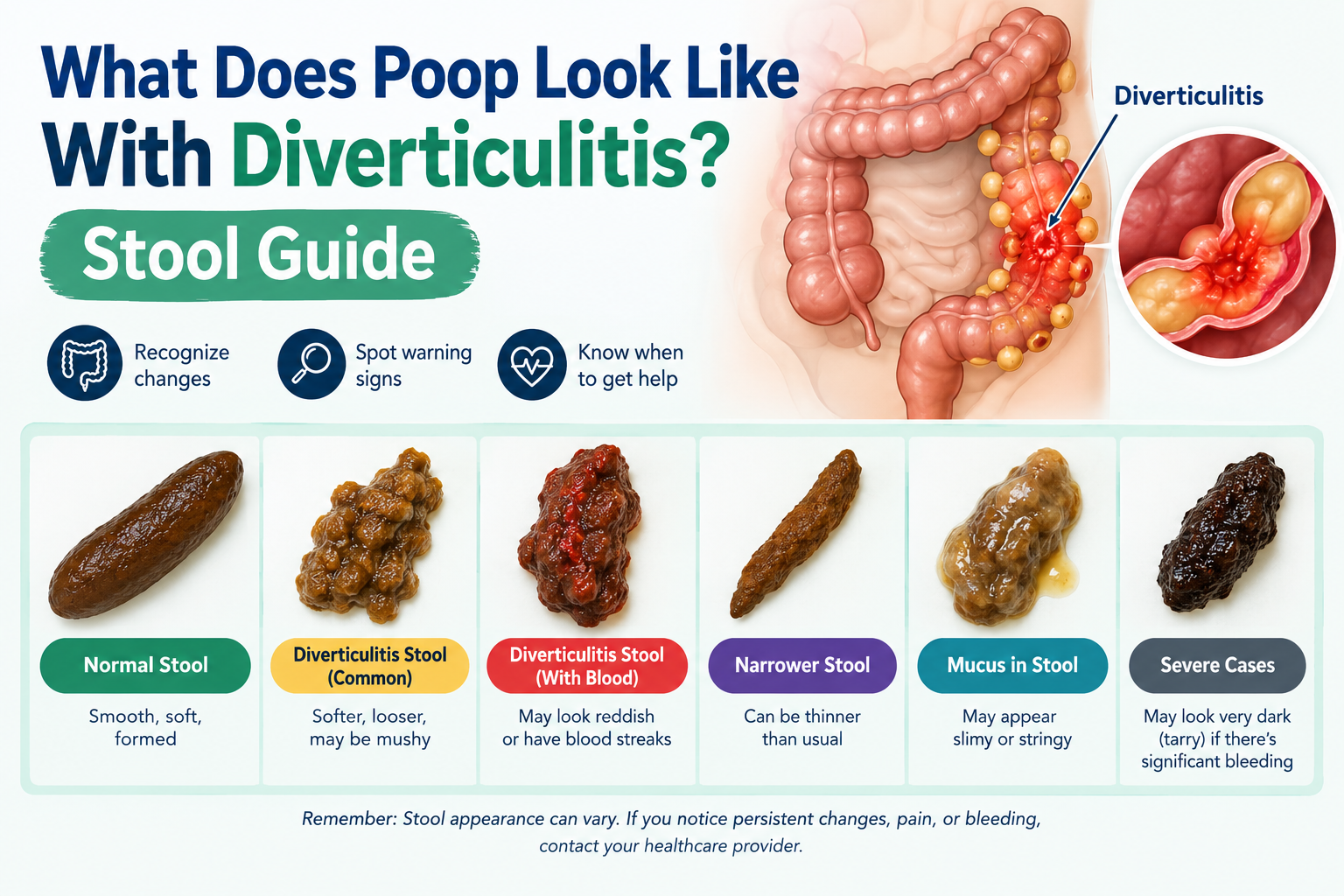
- Diverticulitis Stool Chart
- Diverticulitis Poop Pictures: Can Photos Diagnose It?
- Diverticulitis vs IBS Stool Changes
- Diverticulitis vs Colon Cancer Stool Changes
- How Is Diverticulitis Diagnosed?
- When Are Stool Changes an Emergency?
- Does Diverticulitis Always Require Antibiotics?
- What Should You Eat During a Diverticulitis Flare?
- How Long Do Stool Changes Last After Diverticulitis?
- Frequently Asked Questions
- What does diverticulitis poop look like?
- What color is poop with diverticulitis?
- Does diverticulitis cause thin stools?
- Does diverticulitis cause diarrhea?
- Can diverticulitis cause constipation?
- Can diverticulitis cause mucus in poop?
- Can diverticulitis cause blood in stool?
- Does diverticulitis cause black stool?
- Can poop look normal with diverticulitis?
- What bowel movements are common during a diverticulitis flare?
- How do you know if diverticulitis is getting worse?
- Final Thoughts
Diverticulitis can change your bowel habits, but there is no single type of poop that proves you have diverticulitis. During a flare-up, some people develop constipation and pass small, hard or pellet-like stools, while others experience loose stools or diarrhea. Stool may also appear narrower than usual if inflammation affects how waste moves through the colon.
You may occasionally notice mucus or blood in the stool, but significant bleeding, black tarry stool, severe abdominal pain, fever or persistent vomiting should be assessed promptly by a healthcare professional.
The most important point is that doctors do not diagnose diverticulitis based on stool appearance alone. Symptoms, medical history and imaging—often a CT scan—may be needed to confirm the condition.
This guide explains what poop may look like with diverticulitis, including possible changes in color, shape, texture, frequency and mucus, plus the warning signs that require medical attention.
What Is Diverticulitis?
Diverticulitis occurs when one or more small pouches in the wall of the colon become inflamed.
These pouches are called diverticula. Having diverticula without inflammation is known as diverticulosis.
Diverticulosis is common, particularly as people get older, and many people never experience symptoms. Diverticulitis develops when diverticula become inflamed and can cause symptoms such as:
- Lower abdominal pain
- Changes in bowel habits
- Constipation
- Diarrhea
- Fever
- Nausea
- Abdominal tenderness
- Bloating
Pain often occurs in the lower left side of the abdomen, although the location can vary.
Because diverticulitis affects the colon, it can temporarily change the way stool moves through the digestive tract.
What Does Poop Look Like With Diverticulitis?
Poop during a diverticulitis flare-up may look different from your normal bowel movements.
Possible changes include:
- Small or pellet-like stools
- Hard stools associated with constipation
- Loose or watery stools
- Narrower-than-usual stools
- Irregularly shaped stools
- Mucus in or around the stool
- Blood in the stool in some situations
However, some people with diverticulitis continue to pass stool that looks completely normal.
That is why stool appearance should never be used by itself to diagnose diverticulitis.
The symptoms occurring alongside the bowel changes—especially abdominal pain, tenderness, fever and nausea—are usually more clinically useful.
Normal Poop vs Diverticulitis Poop
The following comparison can make the differences easier to understand.
| Feature | Normal Stool | Possible Diverticulitis Stool Changes |
|---|---|---|
| Color | Usually medium to dark brown | May remain brown; blood may occasionally be present |
| Shape | Formed, sausage-like | May become narrow, irregular or pellet-like |
| Texture | Soft but formed | May become hard or loose |
| Frequency | Regular for the individual | Constipation or more frequent bowel movements |
| Mucus | Usually little or none visible | Mucus may occasionally appear |
| Blood | Not normally present | Requires medical assessment |
| Smell | Typical stool odor | May seem different, but odor alone is not diagnostic |
Diverticulitis does not have a characteristic stool appearance in the way some people expect.
Two people with the same condition may experience completely different bowel changes.
Diverticulitis Poop Color: What Changes Can Occur?
Most people with diverticulitis will still have brown stool.
Changes in stool color become more important when blood is present.
Brown Stool
Brown stool can still occur during a diverticulitis flare.
Having normally colored stool does not rule out diverticulitis.
A person may have considerable abdominal pain while their bowel movements look relatively normal.
Bright Red Blood in Stool
Bright red blood usually indicates bleeding somewhere in the lower gastrointestinal tract.
It may appear:
- On toilet paper
- On the surface of stool
- Mixed with stool
- In the toilet bowl
Blood in stool can have many causes, including hemorrhoids, anal fissures, polyps and diverticular bleeding.
Diverticular bleeding and diverticulitis are related to diverticular disease but are not exactly the same condition.
If you notice significant or repeated rectal bleeding, contact a healthcare professional.
Maroon or Dark Red Stool
Maroon-colored stool can sometimes indicate bleeding from farther inside the colon or digestive tract.
This should not automatically be attributed to diverticulitis.
Medical evaluation is important because gastrointestinal bleeding can have several causes.
Black or Tarry Stool
Black, sticky or tar-like stool is known as melena.
It may indicate bleeding higher in the digestive tract and should not be considered a normal or typical diverticulitis stool change.
Seek urgent medical care if you develop black, tarry stool, particularly if you also feel:
- Weak
- Dizzy
- Short of breath
- Faint
- Unusually tired
What Shape Is Poop With Diverticulitis?
The shape of your stool may temporarily change because inflammation can affect the way waste travels through the colon.
Thin or Narrow Stool
Some people notice thinner stools during digestive flare-ups.
Inflammation, muscle spasms, constipation or narrowing within the bowel can influence stool shape.
However, occasional narrow stool is not specific to diverticulitis.
Persistent pencil-thin stools should be discussed with a healthcare professional because many conditions can affect stool shape.
Pencil-Thin Stool
"Pencil-thin stool" is commonly searched in connection with diverticulitis, but it is important not to overinterpret it.
A single narrow bowel movement is usually not enough to identify a medical problem.
If stools remain unusually narrow for an extended period—especially with bleeding, unexplained weight loss or persistent abdominal symptoms—medical evaluation is appropriate.
Small or Pellet-Like Stool
Small, hard pellets are usually associated with constipation.
Constipation may occur during a diverticulitis episode or when eating habits, hydration levels and activity change because you are unwell.
Pellet-like stool may look similar to small pebbles.
It can also be difficult or uncomfortable to pass.
Irregularly Shaped Stool
Colon inflammation and altered bowel movements can sometimes cause stools to vary in size and shape.
You may notice:
- Several small pieces
- Broken stools
- Uneven shapes
- A mixture of hard and soft stool
These changes are not unique to diverticulitis.
Does Diverticulitis Cause Constipation?
Yes, constipation can occur with diverticulitis.
You may experience:
- Hard stools
- Infrequent bowel movements
- Straining
- Pellet-like stool
- A feeling that the bowel has not emptied completely
Pain and inflammation may also make normal bowel movements more uncomfortable.
Avoid assuming that constipation alone means you have diverticulitis, because it has many other common causes.
Can Diverticulitis Cause Diarrhea?
Yes. Some people experience loose or watery stools instead of constipation.
You may notice:
- More frequent bowel movements
- Urgency
- Loose stool
- Watery stool
- Abdominal cramping
Some people may alternate between constipation and diarrhea.
If diarrhea is severe, persistent or accompanied by dehydration, blood, fever or worsening abdominal pain, contact a healthcare provider.
Can Diverticulitis Cause Mucus in Stool?
Mucus is a substance naturally produced by the intestines.
A small amount may occasionally appear in stool without indicating a serious problem.
Inflammation in the bowel can sometimes increase visible mucus.
It may look:
- Clear
- Whitish
- Jelly-like
- Slimy
Mucus alone does not confirm diverticulitis.
Persistent mucus—particularly with blood, fever, unexplained weight loss or chronic diarrhea—should be medically assessed.
Does Diverticulitis Cause Foul-Smelling Poop?
Stool odor can change when:
- Your diet changes
- You have diarrhea
- Digestion changes
- Gut bacteria change
- You take certain medications
Some people may notice stronger-smelling bowel movements during a digestive illness, but smell is not a reliable way to identify diverticulitis.
Extremely foul-smelling stool can also occur with many other digestive problems.
What Does Poop Look Like During a Diverticulitis Flare-Up?
During an acute diverticulitis flare, bowel habits may change along with abdominal symptoms.
Possible stool patterns include:
- Normal-looking stool
- Constipation with hard stool
- Small pellet-like stools
- Loose stool
- Diarrhea
- Narrower stool
- Mucus
What matters more than appearance is the overall symptom pattern.
A typical flare may include bowel changes alongside:
- Persistent abdominal pain
- Tenderness
- Fever
- Nausea
- Reduced appetite
A healthcare professional can determine whether these symptoms are due to diverticulitis or another condition.
Can Poop Look Normal With Diverticulitis?
Yes.
You can have diverticulitis even when your stool:
- Remains brown
- Is normally formed
- Has its usual consistency
- Looks similar to previous bowel movements
This is one reason online stool pictures cannot reliably diagnose diverticulitis.
The condition affects the colon wall rather than creating one specific stool appearance.
Why Does Diverticulitis Change Bowel Movements?
Inflammation can affect normal colon function.
The colon normally:
- Moves waste forward
- Absorbs water
- Forms stool
- Stores stool until a bowel movement occurs
During diverticulitis, inflammation may temporarily disrupt this process.
That can contribute to:
- Slower bowel movements and constipation
- Faster movement and diarrhea
- Cramping
- Changes in stool shape
Repeated inflammation can occasionally contribute to complications such as narrowing of part of the colon, known as a stricture.
Diverticulitis Stool Chart
Here is a quick reference guide.
| Stool Appearance | Possible Explanation | What to Do |
|---|---|---|
| Normal brown stool | Diverticulitis can occur without visible stool changes | Monitor other symptoms |
| Hard pellets | Constipation | Discuss persistent symptoms with a clinician |
| Loose/watery stool | Diarrhea or altered bowel movement | Hydrate and seek advice if persistent |
| Narrow stool | Spasm, constipation or narrowing may affect shape | Seek care if persistent |
| Visible mucus | Bowel irritation/inflammation | Monitor; seek care if persistent |
| Bright red blood | Lower GI bleeding | Contact a healthcare professional |
| Maroon stool | Possible GI bleeding | Seek medical assessment |
| Black tarry stool | Possible upper GI bleeding | Seek urgent medical care |
Diverticulitis Poop Pictures: Can Photos Diagnose It?
Many people search online for diverticulitis poop pictures, hoping to compare their stool with an image.
Pictures can demonstrate general stool changes, but they cannot confirm whether someone has diverticulitis.
Many digestive conditions can cause similar changes, including:
- Irritable bowel syndrome (IBS)
- Gastroenteritis
- Constipation
- Hemorrhoids
- Inflammatory bowel disease
- Colorectal conditions
Diagnosis requires evaluation of the complete clinical picture.
Diverticulitis vs IBS Stool Changes
Both diverticulitis and irritable bowel syndrome can affect bowel habits.
| Diverticulitis | IBS |
|---|---|
| Inflammation of diverticula | Functional gastrointestinal disorder |
| May cause fever | Fever is not typical |
| Often causes localized abdominal tenderness | Often causes recurring abdominal discomfort |
| Can cause constipation or diarrhea | Can also cause constipation or diarrhea |
| May require imaging | Usually diagnosed using symptoms and medical evaluation |
Because symptoms can overlap, self-diagnosis based on stool appearance is unreliable.
Diverticulitis vs Colon Cancer Stool Changes
People sometimes become concerned about colon cancer when they notice thin or bloody stools.
Stool shape alone cannot distinguish diverticulitis from colorectal cancer.
Seek medical advice if you have persistent changes such as:
- Blood in the stool
- Unexplained weight loss
- Persistent narrow stools
- Ongoing changes in bowel habits
- Unexplained anemia
- Persistent abdominal discomfort
A clinician can decide which tests are appropriate.
How Is Diverticulitis Diagnosed?
Doctors generally diagnose diverticulitis using symptoms, examination and appropriate testing rather than stool appearance.
Evaluation may include:
Medical History
Your clinician may ask about:
- Where the pain occurs
- How long symptoms have lasted
- Bowel changes
- Fever
- Previous episodes of diverticulitis
- Current medications
Physical Examination
A doctor may gently examine the abdomen for areas of tenderness.
Blood Tests
Blood tests may help identify signs of inflammation or infection.
CT Scan
A CT scan is commonly used when acute diverticulitis is suspected because it can show inflamed diverticula and possible complications.
Other tests may be appropriate depending on your symptoms.
When Are Stool Changes an Emergency?
Some symptoms require prompt medical attention.
Seek urgent care if you develop:
- Severe or rapidly worsening abdominal pain
- Large amounts of blood in the stool
- Black, tarry stool
- Persistent vomiting
- High or persistent fever
- A swollen abdomen
- Inability to pass stool or gas with worsening pain
- Fainting or severe dizziness
- Signs of dehydration
These symptoms may indicate significant bleeding or another complication requiring medical assessment.
Does Diverticulitis Always Require Antibiotics?
Not necessarily.
Treatment depends on:
- Severity
- Whether the diverticulitis is uncomplicated or complicated
- Your overall health
- Immune status
- Presence of complications
Some uncomplicated cases may be managed without routine antibiotics under medical supervision, while other cases require antibiotics or hospital treatment.
Follow the treatment plan provided by your healthcare professional.
What Should You Eat During a Diverticulitis Flare?
Dietary recommendations vary depending on symptoms and severity.
A healthcare professional may temporarily recommend easier-to-digest foods or other dietary adjustments while symptoms improve.
Once the acute episode has resolved, many people are encouraged to follow a balanced eating pattern that provides adequate fiber unless their clinician advises otherwise.
High-fiber foods include:
- Vegetables
- Fruits
- Whole grains
- Beans
- Lentils
Adequate fluid intake and regular physical activity can also support normal bowel function.
Do not make major dietary changes during an acute episode without considering your clinician's advice.
How Long Do Stool Changes Last After Diverticulitis?
There is no exact timeline that applies to everyone.
Bowel habits may take time to return to normal after abdominal pain and inflammation improve.
Recovery can depend on:
- Severity of the episode
- Diet
- Hydration
- Medications
- Existing bowel habits
- Other digestive conditions
If stool changes continue long after other symptoms have improved, discuss them with your healthcare provider.
Frequently Asked Questions
What does diverticulitis poop look like?
Diverticulitis does not produce one specific type of stool. Some people develop hard, pellet-like stools or constipation, while others experience loose stool, diarrhea, mucus or narrower stools. Stool can also remain normal.
What color is poop with diverticulitis?
Most stool remains brown. Blood may sometimes appear, but bright red, maroon or black stool should not automatically be blamed on diverticulitis and may require medical evaluation.
Does diverticulitis cause thin stools?
Inflammation, constipation, bowel spasms or narrowing can sometimes affect stool shape. Persistent thin or pencil-like stools should be discussed with a healthcare professional.
Does diverticulitis cause diarrhea?
Yes. Diverticulitis can be associated with changes in bowel habits, including diarrhea in some people and constipation in others.
Can diverticulitis cause constipation?
Yes. Constipation can occur and may result in hard, small or pellet-shaped stools.
Can diverticulitis cause mucus in poop?
Inflammation may sometimes increase visible mucus, but mucus is not specific to diverticulitis and can have many causes.
Can diverticulitis cause blood in stool?
Bleeding can occur in people with diverticular disease, but diverticular bleeding is distinct from inflammation itself. Any significant or unexplained rectal bleeding should be assessed by a healthcare professional.
Does diverticulitis cause black stool?
Black, tarry stool is not something to assume is caused by diverticulitis. It can indicate gastrointestinal bleeding and should receive prompt medical attention.
Can poop look normal with diverticulitis?
Yes. Some people have diverticulitis without noticeable changes in stool appearance.
What bowel movements are common during a diverticulitis flare?
Possible changes include constipation, hard stool, diarrhea, loose stool, narrower stools and irregular bowel habits. There is no single characteristic bowel movement.
How do you know if diverticulitis is getting worse?
Worsening or severe abdominal pain, persistent fever, vomiting, significant rectal bleeding, inability to pass stool or gas, abdominal swelling or feeling faint are reasons to seek prompt medical care.
Final Thoughts
So, what does poop look like with diverticulitis?
There is no single appearance that confirms the condition.
During a diverticulitis flare, you may experience hard or pellet-like stools, constipation, loose stools, diarrhea, mucus or temporarily narrower bowel movements. Other people may have completely normal-looking stool.
The most important clue is not stool appearance alone but the combination of bowel changes with symptoms such as persistent abdominal pain, tenderness, fever or nausea.
Blood in the stool especially significant bright red bleeding, maroon stool or black tarry stool—deserves medical attention rather than self-diagnosis.
If you are concerned that you may have diverticulitis, a healthcare professional can evaluate your symptoms and determine whether imaging or other testing is needed.
This article is for general educational purposes and is not a substitute for diagnosis or treatment from a qualified healthcare professional.
This guide is general education and is not medical, legal or career advice. Entry rules, fees, training lengths and treatment guidance change, so confirm them with the official body in your country or with your own doctor or pharmacist. Read our disclaimer. Found an error? Tell us.