Home / Guides / Medical profession
What Do Family Practice Physicians Do? Services & Roles Explained
Learn what family practice physicians do, including services, conditions treated, preventive care, chronic disease management, and when to see a family doctor.
On this page (46 sections)
- What Is a Family Practice Physician?
- What Do Family Practice Physicians Do?
- Services Provided by Family Practice Physicians
- 1. Preventive Healthcare and Wellness Exams
- 2. Diagnosis and Treatment of Common Illnesses
- 3. Chronic Disease Management
- 4. Vaccinations and Immunizations
- 5. Routine Physical Examinations
- 6. Women's Health Services
- 7. Children's Healthcare
- 8. Men's Health Services
- 9. Mental Health Support
- 10. Minor Procedures
- What Conditions Can Family Practice Physicians Treat?
- Respiratory Conditions
- Cardiovascular Conditions
- Metabolic Conditions
- Musculoskeletal Problems
- Skin Conditions
- Digestive Problems
- What Happens During a Family Medicine Visit?
- 1. Medical History Review
- 2. Physical Examination
- 3. Testing or Screening
- 4. Treatment Plan
- Family Practice Physician vs Primary Care Physician
- Family Medicine Physician vs Internal Medicine Doctor
- Family Practice Physician vs Specialist
- When Should You See a Family Practice Physician?
- Benefits of Having a Family Practice Physician
- Long-Term Healthcare Relationship
- Comprehensive Care
- Early Disease Detection
- Better Care Coordination
- What Are Family Practice Physicians Not Allowed To Do?
- How to Choose a Family Practice Physician
- Frequently Asked Questions
- What do family practice physicians do?
- Is a family practice physician the same as a family doctor?
- Can family practice physicians treat children?
- What conditions do family doctors treat?
- Can a family physician prescribe medication?
- Do family doctors provide preventive care?
- When should I see a family practice physician?
- Can a family physician refer me to a specialist?
- Final Thoughts
If you are wondering what do family practice physicians do, the simple answer is that they provide comprehensive healthcare for people of all ages, from infants and children to adults and older adults.
Family practice physicians, also called family medicine doctors, are primary care providers who diagnose illnesses, treat common health conditions, provide preventive care, manage chronic diseases, perform routine health examinations, and coordinate specialized care when needed.
Unlike doctors who focus on only one area of medicine, family practice physicians are trained to care for the whole person and often develop long-term relationships with patients and their families.
They are usually the first healthcare professionals people visit for routine checkups, new symptoms, preventive screenings, and ongoing health concerns.
This guide explains what family practice physicians do, what conditions they treat, what services they provide, and when you should consider seeing one.
What Is a Family Practice Physician?
A family practice physician is a medical doctor who specializes in family medicine, a branch of primary care focused on providing healthcare for patients of all ages.
Family medicine doctors receive training in multiple areas of healthcare, allowing them to treat:
- Children
- Teenagers
- Adults
- Older adults
Their approach focuses on:
- Preventing disease
- Treating illnesses
- Managing long-term conditions
- Supporting overall wellness
- Understanding each patient's complete health history
A family practice physician often becomes a patient's main healthcare provider throughout different stages of life.
What Do Family Practice Physicians Do?
Family practice physicians provide a wide range of healthcare services.
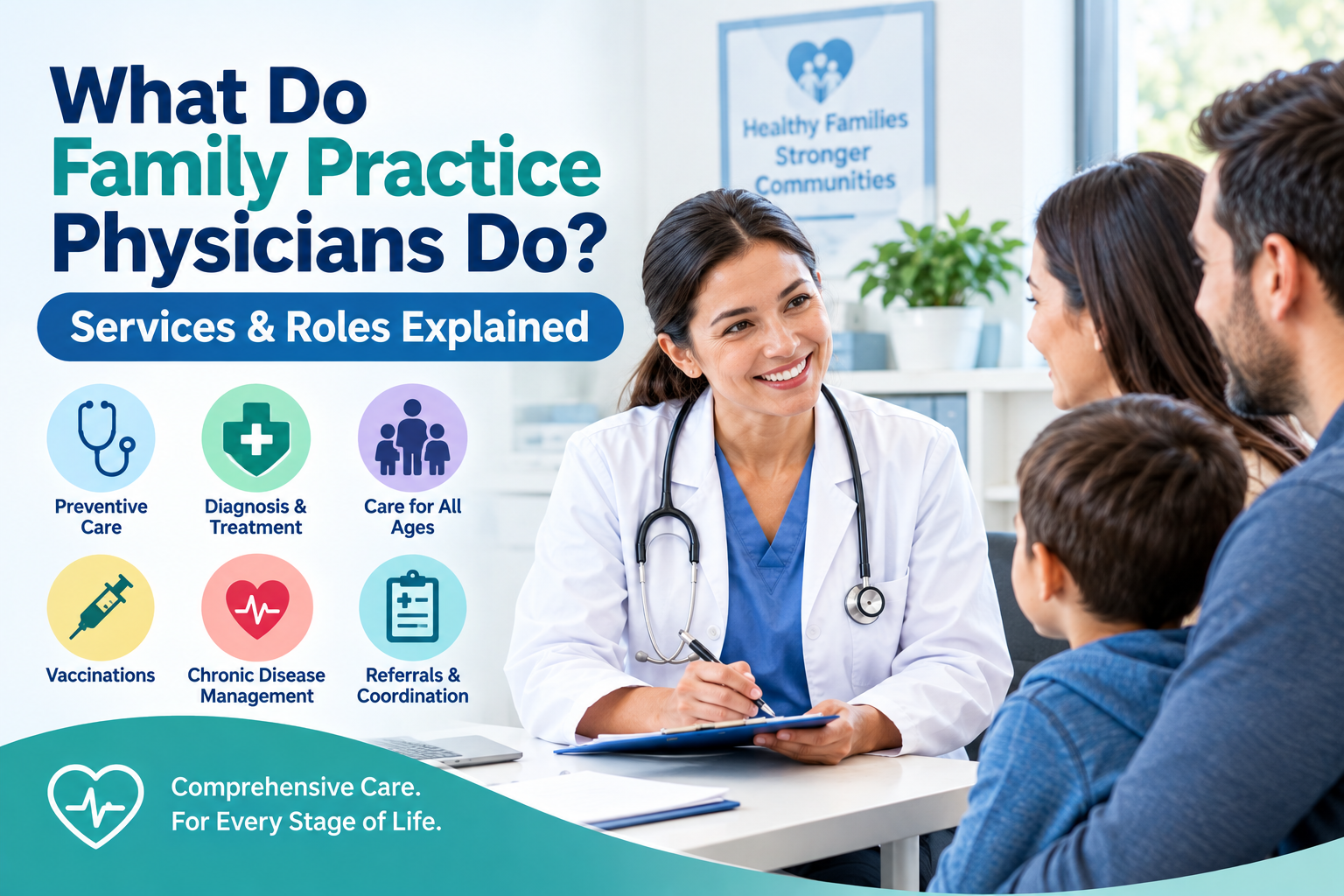
Their main responsibilities include:
- Diagnosing medical conditions
- Treating common illnesses
- Performing physical examinations
- Providing preventive care
- Managing chronic diseases
- Ordering medical tests
- Prescribing medications
- Giving vaccinations
- Providing health counseling
- Referring patients to specialists when necessary
They focus not only on treating problems but also on helping patients maintain better health over time.
Services Provided by Family Practice Physicians
1. Preventive Healthcare and Wellness Exams
One of the most important roles of family practice physicians is preventing health problems before they become serious.
Preventive services may include:
- Annual physical exams
- Health risk assessments
- Blood pressure checks
- Cholesterol screening
- Diabetes screening
- Cancer screening recommendations
- Lifestyle counseling
- Vaccination updates
Regular preventive visits allow doctors to identify potential health concerns early.
2. Diagnosis and Treatment of Common Illnesses
Family practice physicians diagnose and treat many everyday health conditions.
They commonly treat:
- Colds
- Flu
- Fever
- Sore throat
- Ear infections
- Sinus infections
- Respiratory infections
- Allergies
- Skin problems
- Minor injuries
If a condition requires specialized care, they can recommend the appropriate specialist.
3. Chronic Disease Management
Family doctors play an important role in helping patients manage long-term health conditions.
They regularly monitor and treat conditions such as:
- High blood pressure
- Diabetes
- High cholesterol
- Asthma
- Arthritis
- Thyroid disorders
- Heart disease risk factors
Chronic disease management may include:
- Medication adjustments
- Lifestyle recommendations
- Regular monitoring
- Follow-up appointments
- Coordination with specialists
4. Vaccinations and Immunizations
Family practice physicians provide vaccinations for different age groups.
These may include:
- Childhood vaccines
- Flu shots
- COVID-19 vaccines
- Travel vaccines
- Adult immunizations
- Preventive vaccines for older adults
Vaccinations help protect individuals and communities from preventable diseases.
5. Routine Physical Examinations
Family doctors perform physical examinations to evaluate overall health.
A routine exam may include:
- Checking blood pressure
- Measuring weight and height
- Listening to heart and lungs
- Reviewing medical history
- Evaluating symptoms
- Discussing lifestyle habits
Regular physical exams help identify health risks early.
6. Women's Health Services
Many family practice physicians provide basic women's healthcare services.
These may include:
- Preventive screenings
- Birth control counseling
- Reproductive health discussions
- Menstrual health concerns
- Pregnancy-related care coordination
- Menopause discussions
For complex gynecological issues, they may refer patients to an obstetrician or gynecologist.
7. Children's Healthcare
Family practice physicians are trained to care for children.
Pediatric services may include:
- Child wellness visits
- Growth monitoring
- Vaccinations
- Development assessments
- Childhood illness treatment
- School health forms
Unlike some primary care providers who only treat adults, family physicians can care for entire families.
8. Men's Health Services
Family doctors also support men's healthcare needs.
Services may include:
- Preventive screenings
- Blood pressure monitoring
- Cholesterol management
- Prostate health discussions
- Lifestyle counseling
- Sexual health concerns
9. Mental Health Support
Many family practice physicians provide initial support for mental health concerns.
They may help with:
- Anxiety
- Depression
- Stress management
- Sleep problems
- Emotional wellness
When specialized mental healthcare is needed, they can connect patients with mental health professionals.
10. Minor Procedures
Depending on training and location, some family practice physicians perform minor medical procedures.
Examples include:
- Wound care
- Removing minor skin lesions
- Treating simple injuries
- Skin biopsies
- Joint injections
- Basic splinting
The procedures available depend on the physician's training and practice setting.
What Conditions Can Family Practice Physicians Treat?
Family medicine doctors treat a wide range of conditions.
Common examples include:
Respiratory Conditions
- Asthma
- Bronchitis
- Allergies
- Respiratory infections
Cardiovascular Conditions
- High blood pressure
- High cholesterol
- Heart disease risk assessment
Metabolic Conditions
- Diabetes
- Obesity
- Thyroid problems
Musculoskeletal Problems
- Back pain
- Joint pain
- Sprains
- Minor injuries
Skin Conditions
- Rashes
- Acne
- Skin infections
- Minor skin problems
Digestive Problems
- Acid reflux
- Stomach infections
- Digestive concerns
What Happens During a Family Medicine Visit?
A typical appointment may include several steps.
1. Medical History Review
The doctor may ask about:
- Current symptoms
- Previous illnesses
- Medications
- Allergies
- Family medical history
- Lifestyle habits
2. Physical Examination
Depending on your concerns, the physician may check:
- Vital signs
- Heart and lungs
- Skin
- Movement
- General health indicators
3. Testing or Screening
The doctor may recommend:
- Blood tests
- Imaging tests
- Screening tests
- Additional evaluations
4. Treatment Plan
Your physician may provide:
- Medication
- Lifestyle recommendations
- Follow-up instructions
- Specialist referrals
Family Practice Physician vs Primary Care Physician
Many people confuse these terms.
A family practice physician is a type of primary care physician.
| Family Practice Physician | Primary Care Physician |
|---|---|
| Specializes in family medicine | Broad category of first-contact doctors |
| Treats all ages | May focus on specific age groups |
| Provides preventive and ongoing care | Provides general healthcare services |
| Often treats entire families | May include family doctors, internists, pediatricians |
Family Medicine Physician vs Internal Medicine Doctor
Both provide primary care, but their training differs.
| Family Medicine Doctor | Internal Medicine Doctor |
|---|---|
| Treats children and adults | Usually treats adults only |
| Focuses on whole-family care | Focuses on adult medical conditions |
| Provides broad healthcare | Often manages complex adult illnesses |
Family Practice Physician vs Specialist
A family physician manages general healthcare needs, while specialists focus on specific areas.
Examples:
Family physician: - First evaluation - Preventive care - Common conditions - Chronic disease monitoring
Specialist: - Advanced treatment in one medical area
Examples:
- Cardiologist → heart conditions
- Dermatologist → skin conditions
- Neurologist → nervous system disorders
Family physicians often coordinate care between different specialists.
When Should You See a Family Practice Physician?
You should consider seeing a family doctor for:
- Routine checkups
- New symptoms
- Preventive screenings
- Medication reviews
- Vaccinations
- Chronic disease management
- Health concerns
- Lifestyle advice
They are often the best starting point when you are unsure what type of medical care you need.
Benefits of Having a Family Practice Physician
Long-Term Healthcare Relationship
Family doctors often care for patients over many years, allowing them to understand:
- Medical history
- Lifestyle
- Health goals
- Family risks
Comprehensive Care
They provide care for many different health needs instead of focusing on only one condition.
Early Disease Detection
Regular visits help identify:
- Health risks
- Early symptoms
- Preventable conditions
Better Care Coordination
Family physicians help organize care when patients need:
- Specialists
- Additional testing
- Long-term treatment plans
What Are Family Practice Physicians Not Allowed To Do?
Family practice physicians can provide a wide range of medical services, but there are limits based on:
- Their training
- State or country regulations
- Practice resources
- Medical complexity
They may refer patients to specialists for conditions requiring advanced expertise, such as:
- Complex surgeries
- Highly specialized cancer care
- Advanced neurological procedures
- Certain high-risk medical conditions
Referral does not mean they cannot help—it means specialized care may provide better outcomes.
How to Choose a Family Practice Physician
When selecting a family doctor, consider:
- Medical qualifications
- Experience
- Communication style
- Office location
- Availability
- Accepted insurance plans
- Range of services offered
A good relationship with your family physician can improve your long-term healthcare experience.
Frequently Asked Questions
What do family practice physicians do?
Family practice physicians provide primary healthcare services including preventive care, diagnosis, treatment, chronic disease management, vaccinations, and health counseling for patients of all ages.
Is a family practice physician the same as a family doctor?
Yes. Family practice physicians, family medicine doctors, and family doctors generally refer to physicians trained in family medicine.
Can family practice physicians treat children?
Yes. Family physicians are trained to provide healthcare for children, adults, and older adults.
What conditions do family doctors treat?
They treat common illnesses, chronic diseases, minor injuries, infections, skin conditions, and many other health concerns.
Can a family physician prescribe medication?
Yes. Family physicians can prescribe medications when appropriate based on a patient's health condition.
Do family doctors provide preventive care?
Yes. Preventive care is one of the main roles of family practice physicians and includes screenings, vaccinations, and wellness exams.
When should I see a family practice physician?
You can visit a family doctor for routine checkups, new symptoms, preventive care, medication questions, and ongoing health management.
Can a family physician refer me to a specialist?
Yes. Family physicians commonly coordinate specialist referrals when patients need advanced or specialized care.
Final Thoughts
Family practice physicians are often the foundation of the healthcare system. They provide comprehensive care for people of all ages, helping patients prevent illness, manage health conditions, and maintain overall wellness.
From routine checkups and vaccinations to chronic disease management and specialist referrals, family doctors play an important role in keeping individuals and families healthy.
If you need a healthcare provider for ongoing medical support, preventive care, or general health concerns, a family practice physician is often the best place to start.
This article is for educational purposes only and does not replace professional medical advice, diagnosis, or treatment.
This guide is general education and is not medical, legal or career advice. Entry rules, fees, training lengths and treatment guidance change, so confirm them with the official body in your country or with your own doctor or pharmacist. Read our disclaimer. Found an error? Tell us.