Home / Guides / Medical profession
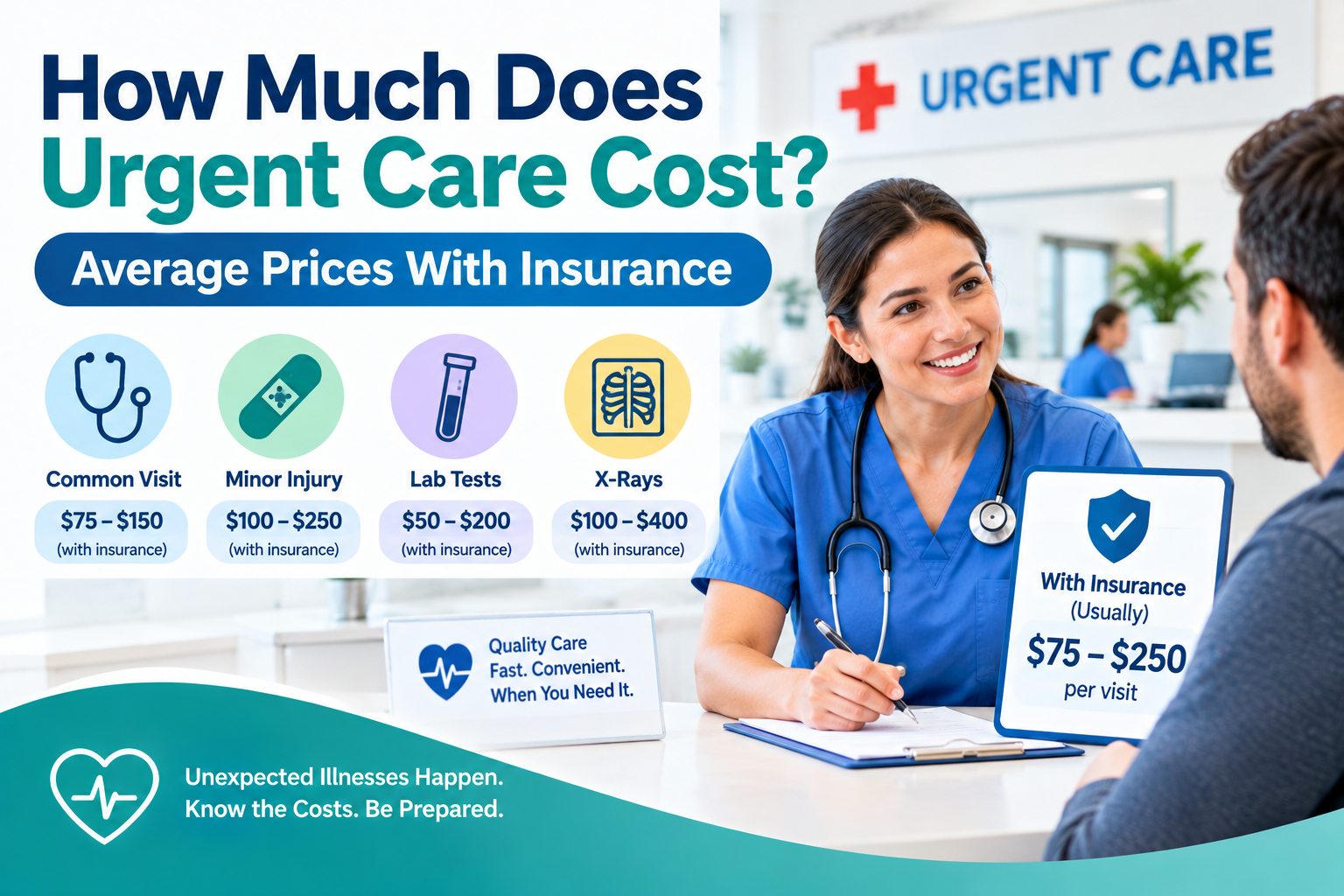
How Much Does Urgent Care Cost? Average Prices With Insurance
Find out how much urgent care costs with and without insurance. Learn average urgent care visit prices, cost factors, ER comparison, and ways to save money.
On this page (42 sections)
- How Much Does an Urgent Care Visit Cost?
- How Much Does Urgent Care Cost Without Insurance?
- How Much Does Urgent Care Cost With Insurance?
- What Factors Affect Urgent Care Cost?
- 1. Location of the Urgent Care Center
- 2. Insurance Coverage
- 3. Type of Medical Problem
- 4. Diagnostic Tests
- X-rays
- Laboratory Tests
- Other Testing
- 5. Procedures and Treatments
- How Much Does Urgent Care Cost for Common Problems?
- Cost of Urgent Care for a Cold
- Cost of Urgent Care for Flu
- Cost of Urgent Care for a UTI
- Cost of Urgent Care for Stitches
- Cost of Urgent Care X-Ray
- Is Urgent Care More Expensive Than Primary Care?
- Is Urgent Care Cheaper Than the Emergency Room?
- When Should You Go to Urgent Care?
- When Should You Go to the Emergency Room Instead?
- How to Reduce Urgent Care Costs
- Check Insurance Coverage
- Compare Urgent Care Centers
- Ask About Self-Pay Discounts
- Avoid Unnecessary Tests
- Use Primary Care When Appropriate
- Can Urgent Care Bill You Later?
- Why Is Urgent Care So Expensive?
- What Should You Ask Before Visiting Urgent Care?
- Frequently Asked Questions
- How much does urgent care cost without insurance?
- How much does urgent care cost with insurance?
- Is urgent care cheaper than the emergency room?
- Is urgent care more expensive than primary care?
- Does urgent care accept insurance?
- How much does an urgent care visit cost for a cold?
- How much does urgent care charge for an X-ray?
- Can I go to urgent care without insurance?
- What makes an urgent care visit more expensive?
- Final Thoughts
If you are wondering how much does urgent care cost, the answer depends on several factors, including whether you have insurance, the type of treatment you need, your location, and whether additional tests or procedures are required.
In the United States, the average urgent care visit cost without insurance is typically around $100 to $300 for a basic visit. With insurance, many patients pay a copay or a smaller out-of-pocket amount depending on their health plan.
Urgent care centers are usually more affordable than emergency rooms and are designed for medical problems that need prompt attention but are not life-threatening.
The final bill may increase if you need services such as:
- X-rays
- Blood tests
- Urine tests
- Stitches
- Injections
- Prescription medications
- Additional procedures
This guide explains urgent care costs with and without insurance, what affects pricing, how urgent care compares with primary care and emergency rooms, and ways to reduce your medical expenses.
How Much Does an Urgent Care Visit Cost?
The average cost of an urgent care visit varies depending on the services provided.
Typical price ranges:
| Type of Urgent Care Service | Estimated Cost Without Insurance |
|---|---|
| Basic urgent care visit | $100–$300 |
| Visit with basic testing | $150–$500 |
| X-ray services | Additional cost |
| Lab tests | Additional cost |
| Stitches or minor procedures | Higher depending on complexity |
| Prescription medication | Depends on medication |
A simple consultation may cost less, while visits involving diagnostic tests or procedures usually cost more.
How Much Does Urgent Care Cost Without Insurance?
If you do not have health insurance, you will usually pay the full cost of the visit.
The average urgent care cost without insurance is often between:
$100 and $300 for a basic appointment
However, the total bill can increase depending on:
- Type of illness or injury
- Required tests
- Treatments provided
- Location of the clinic
- Facility pricing
For example:
- A visit for a simple cold may cost less
- A visit requiring an X-ray or stitches may cost more
Many urgent care centers offer self-pay pricing or discounts for patients without insurance.
How Much Does Urgent Care Cost With Insurance?
With insurance, your cost depends on your specific health plan.
You may pay:
- A copay
- Coinsurance
- A deductible amount
- Remaining out-of-pocket expenses
Common factors include:
- Your insurance provider
- Whether the urgent care center is in-network
- Your deductible status
- Your coverage level
For some patients, an urgent care visit may cost only a small copayment.
For others, especially before meeting a deductible, the cost may be higher.
What Factors Affect Urgent Care Cost?
Urgent care prices are not the same everywhere.
Several factors influence the final bill.
1. Location of the Urgent Care Center
Healthcare costs vary significantly by location.
Clinics in:
- Large cities
- High-cost regions
- Private healthcare networks
may charge more than clinics in smaller communities.
2. Insurance Coverage
Insurance can greatly change what you pay.
Your cost depends on:
- Your health plan
- Copay amount
- Deductible
- Network status
- Coverage rules
Always confirm whether an urgent care center accepts your insurance before visiting.
3. Type of Medical Problem
A basic consultation usually costs less than a visit requiring procedures.
Examples:
A simple illness visit:
- Cold
- Mild fever
- Sore throat
may require only an examination.
A more complex visit may involve:
- Imaging
- Laboratory testing
- Medication
- Procedures
4. Diagnostic Tests
Tests can increase the total cost of urgent care.
Common additional services include:
X-rays
Often needed for:
- Possible fractures
- Injuries
- Joint problems
Laboratory Tests
Examples:
- Flu tests
- COVID tests
- Strep tests
- Urine tests
- Blood tests
Other Testing
Some conditions require additional evaluation before treatment.
5. Procedures and Treatments
Urgent care centers can provide many minor procedures.
Additional costs may apply for:
- Stitches
- Wound cleaning
- Splinting
- Injections
- Medication administration
- Breathing treatments
How Much Does Urgent Care Cost for Common Problems?
The price depends on the complexity of your visit.
Cost of Urgent Care for a Cold
A cold-related visit is often among the less expensive urgent care appointments.
Costs may include:
- Consultation fee
- Possible flu or COVID testing
- Medication recommendations
---
Cost of Urgent Care for Flu
A flu visit may include:
- Medical evaluation
- Flu testing
- Prescription medication if appropriate
Additional testing may increase the cost.
Cost of Urgent Care for a UTI
A urinary tract infection visit may include:
- Examination
- Urine testing
- Prescription medication
Testing and treatment affect the final bill.
Cost of Urgent Care for Stitches
A cut requiring stitches usually costs more because it involves:
- Wound cleaning
- Procedure time
- Supplies
- Follow-up instructions
Cost of Urgent Care X-Ray
If an injury requires an X-ray, the total bill may increase because imaging services are added.
Examples:
- Possible broken bone
- Joint injury
- Severe pain after trauma
Is Urgent Care More Expensive Than Primary Care?
Urgent care is often more expensive than a regular primary care visit but usually cheaper than an emergency room visit.
| Urgent Care | Primary Care |
|---|---|
| Same-day walk-in access | Usually scheduled appointments |
| Higher cost per visit | Often lower cost |
| Treats urgent but non-emergency problems | Provides ongoing healthcare |
| Extended hours | Regular office hours |
Primary care is usually better for:
- Routine checkups
- Preventive care
- Chronic disease management
Urgent care is useful when:
- Your doctor is unavailable
- You need same-day treatment
- The issue cannot wait
Is Urgent Care Cheaper Than the Emergency Room?
Yes, urgent care is usually much less expensive than an emergency room.
Emergency rooms are designed for serious and life-threatening conditions and have higher operating costs.
| Urgent Care | Emergency Room |
|---|---|
| Lower cost | Much higher cost |
| Shorter wait times | Longer waits possible |
| Minor injuries and illnesses | Life-threatening emergencies |
| Walk-in treatment | Emergency medical care |
When Should You Go to Urgent Care?
Urgent care is appropriate for many non-life-threatening conditions.
Examples include:
- Fever
- Cold and flu symptoms
- Ear infections
- Minor cuts
- Sprains
- Mild allergic reactions
- Rashes
- Urinary tract infections
- Minor burns
- Sore throat
When Should You Go to the Emergency Room Instead?
The emergency room is the better choice for serious symptoms.
Seek emergency care for:
- Chest pain
- Difficulty breathing
- Stroke symptoms
- Severe bleeding
- Loss of consciousness
- Major injuries
- Severe allergic reactions
- Life-threatening conditions
Choosing the right level of care can save time and money.
How to Reduce Urgent Care Costs
Healthcare expenses can add up, but there are ways to manage costs.
Check Insurance Coverage
Before visiting:
- Confirm the clinic accepts your insurance
- Check your copay
- Understand your deductible
Compare Urgent Care Centers
Prices can vary between facilities.
Compare:
- Visit fees
- Self-pay prices
- Available services
Ask About Self-Pay Discounts
Some clinics offer lower prices for patients paying without insurance.
Avoid Unnecessary Tests
Discuss with your healthcare provider which tests are medically needed.
Use Primary Care When Appropriate
For routine concerns, primary care may be more affordable.
Can Urgent Care Bill You Later?
Yes.
Many urgent care centers send bills after your visit.
Your final bill may include:
- Facility charges
- Provider fees
- Laboratory charges
- Imaging costs
- Medication costs
Review your bill carefully and contact the clinic or insurance company if something is unclear.
Why Is Urgent Care So Expensive?
Urgent care costs more than a regular doctor visit because it provides:
- Same-day access
- Extended hours
- On-site testing
- Walk-in services
- Medical staff availability
However, it remains less expensive than emergency room care for non-emergency conditions.
What Should You Ask Before Visiting Urgent Care?
Before your appointment, ask:
- How much is the visit fee?
- Do you accept my insurance?
- Are tests included?
- Are there additional charges?
- Do you offer self-pay discounts?
Understanding costs beforehand can help avoid unexpected bills.
Frequently Asked Questions
How much does urgent care cost without insurance?
Urgent care without insurance typically costs around $100 to $300 for a basic visit, but additional tests and procedures can increase the total cost.
How much does urgent care cost with insurance?
With insurance, the cost depends on your plan, copay, deductible, and whether the clinic is in-network.
Is urgent care cheaper than the emergency room?
Yes. Urgent care is usually significantly cheaper than emergency room care for non-life-threatening conditions.
Is urgent care more expensive than primary care?
Usually, yes. Urgent care often costs more because it provides same-day access and extended hours.
Does urgent care accept insurance?
Most urgent care centers accept insurance, but coverage varies. It is best to confirm before your visit.
How much does an urgent care visit cost for a cold?
A cold visit is often one of the lower-cost urgent care visits, but testing and medications may increase the bill.
How much does urgent care charge for an X-ray?
X-ray costs vary depending on the facility, insurance coverage, and type of imaging needed.
Can I go to urgent care without insurance?
Yes. Many urgent care centers accept uninsured patients and offer self-pay pricing.
What makes an urgent care visit more expensive?
Additional services such as laboratory tests, imaging, procedures, and medications usually increase the total cost.
Final Thoughts
So, how much does urgent care cost?
The average urgent care visit usually costs between $100 and $300 without insurance, while insured patients may pay a smaller copay or out-of-pocket amount depending on their plan.
The final price depends on:
- Your location
- Insurance coverage
- Type of medical problem
- Tests needed
- Treatments provided
Urgent care is often a cost-effective option for non-life-threatening medical issues when you need faster care than a regular doctor appointment but do not require emergency services.
Understanding the potential costs before visiting can help you make better healthcare decisions.
This article is for educational purposes only and should not replace professional medical advice.
This guide is general education and is not medical, legal or career advice. Entry rules, fees, training lengths and treatment guidance change, so confirm them with the official body in your country or with your own doctor or pharmacist. Read our disclaimer. Found an error? Tell us.