Home / Guides / Medical education
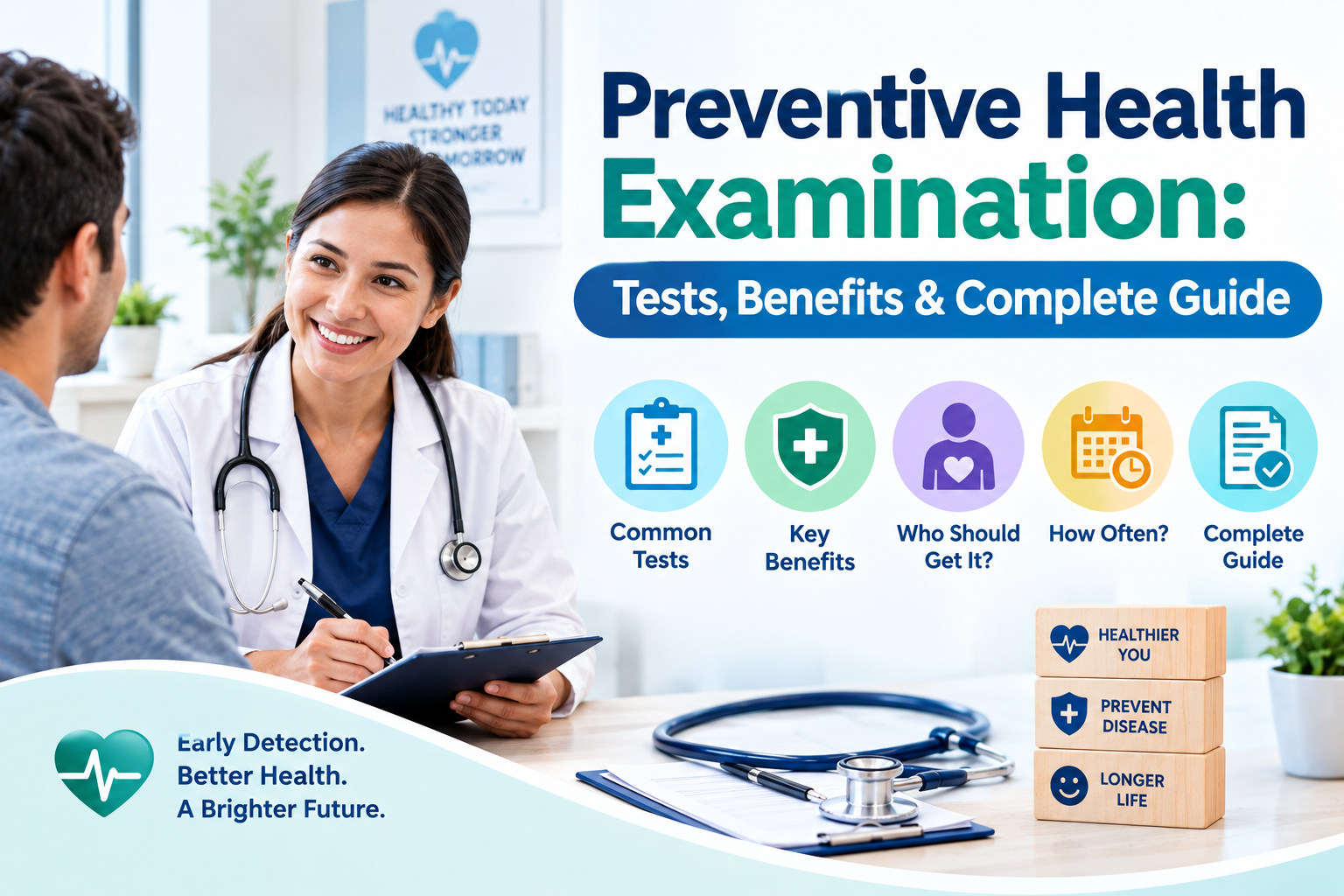
Preventive Health Examination: Tests, Benefits & Complete Guide
Learn what a preventive health examination includes, why it matters, common health screenings, tests by age, and how regular checkups help prevent disease.
On this page (45 sections)
- What Is a Preventive Health Examination?
- Why Are Preventive Health Examinations Important?
- 1. Early Detection of Health Problems
- 2. Prevention of Serious Diseases
- 3. Monitoring Your Overall Health
- 4. Personalized Health Recommendations
- What Happens During a Preventive Health Examination?
- Medical History Review
- Physical Examination
- Health Risk Assessment
- Preventive Screening Recommendations
- Common Tests Included in a Preventive Health Examination
- Blood Pressure Screening
- Cholesterol Testing
- Blood Sugar Testing
- Complete Blood Count (CBC)
- Kidney Function Tests
- Liver Function Tests
- Cancer Screening Tests
- Preventive Health Examination by Age
- Preventive Health Examination in Your 20s
- Preventive Health Examination in Your 30s
- Preventive Health Examination in Your 40s
- Preventive Health Examination in Your 50s and Older
- Preventive Health Examination for Men
- Preventive Health Examination for Women
- How Often Should You Get a Preventive Health Examination?
- Preventive Health Examination vs Routine Checkup
- Preventive Health Examination vs Diagnostic Examination
- What Should You Bring to a Preventive Health Exam?
- How To Prepare for a Preventive Health Examination
- Review Your Medical History
- Track Your Lifestyle Habits
- Prepare Questions
- Benefits of Regular Preventive Health Examinations
- Frequently Asked Questions
- What is a preventive health examination?
- What tests are included in a preventive health exam?
- How often should I get a preventive health examination?
- Is a preventive health exam the same as a physical exam?
- Why are preventive health screenings important?
- Do healthy people need preventive health exams?
- What is included in an annual wellness exam?
- Can preventive exams detect cancer?
- Final Thoughts
A preventive health examination is a routine medical checkup designed to detect potential health problems before they become serious. Instead of waiting until symptoms appear, preventive health exams help identify risk factors, monitor your overall health, and support early treatment.
Many health conditions, including high blood pressure, diabetes, heart disease, and certain cancers, may develop silently without obvious symptoms. Regular preventive health examinations allow healthcare providers to identify these issues early and recommend lifestyle changes, screenings, or treatments when needed.
A preventive health exam is not only for people who feel sick. It is an important part of maintaining long-term health at every stage of life.
This guide explains what a preventive health examination includes, why it is important, what tests are commonly performed, how often you need one, and what screenings may be recommended based on your age and risk factors.
---
What Is a Preventive Health Examination?
A preventive health examination is a healthcare visit focused on preventing illness and maintaining good health rather than treating an existing disease.
During a preventive exam, a healthcare professional evaluates:
- Overall health status
- Medical history
- Family health risks
- Lifestyle habits
- Vaccination status
- Disease risk factors
- Recommended health screenings
The goal is to identify possible health concerns early and reduce the risk of developing serious conditions.
A preventive health examination may also be called:
- Preventive health checkup
- Wellness exam
- Annual physical exam
- Routine health screening
- Health assessment
Why Are Preventive Health Examinations Important?
Preventive health exams play an important role in maintaining long-term health.
1. Early Detection of Health Problems
Many diseases develop slowly and may not cause symptoms in the beginning.
Preventive screenings can help detect:
- High blood pressure
- Diabetes
- High cholesterol
- Heart disease risk
- Certain cancers
- Kidney problems
- Thyroid disorders
Finding problems early often makes treatment easier and more effective.
2. Prevention of Serious Diseases
A preventive health examination helps identify risk factors before they lead to illness.
For example:
- High blood pressure can be managed before causing heart complications
- High cholesterol can be addressed before increasing cardiovascular risk
- Prediabetes can be managed before progressing to diabetes
3. Monitoring Your Overall Health
Regular checkups allow healthcare providers to track changes over time.
Your doctor can compare:
- Blood pressure trends
- Weight changes
- Laboratory results
- Lifestyle habits
- Existing health conditions
4. Personalized Health Recommendations
Preventive exams provide an opportunity to discuss:
- Nutrition
- Exercise
- Sleep
- Stress management
- Smoking cessation
- Alcohol use
- Mental health
Healthcare advice can be tailored to your personal risks and goals.
What Happens During a Preventive Health Examination?
A preventive health examination usually includes several parts.
Medical History Review
Your healthcare provider may ask about:
- Previous illnesses
- Surgeries
- Medications
- Allergies
- Family medical history
- Lifestyle habits
Family history is especially important because some conditions have genetic risk factors.
Physical Examination
A routine physical exam may include checking:
- Blood pressure
- Heart rate
- Height and weight
- Body mass index (BMI)
- Heart and lung function
- Skin changes
- General physical health
Health Risk Assessment
Your doctor may evaluate risks related to:
- Heart disease
- Diabetes
- Cancer
- Obesity
- Mental health
- Lifestyle factors
Preventive Screening Recommendations
Based on your age, sex, medical history, and risk factors, your healthcare provider may recommend specific tests.
Common Tests Included in a Preventive Health Examination
The tests included depend on your health needs.
Common preventive screenings include:
Blood Pressure Screening
High blood pressure often has no symptoms.
Regular blood pressure checks help identify hypertension early.
Untreated high blood pressure may increase the risk of:
- Heart disease
- Stroke
- Kidney disease
Cholesterol Testing
A lipid panel measures:
- Total cholesterol
- LDL cholesterol
- HDL cholesterol
- Triglycerides
High cholesterol can increase the risk of cardiovascular disease.
Blood Sugar Testing
Blood glucose testing helps detect:
- Diabetes
- Prediabetes
- Abnormal blood sugar levels
Common tests include:
- Fasting blood glucose
- HbA1c test
Complete Blood Count (CBC)
A CBC evaluates blood cells and may help identify:
- Anemia
- Infection
- Certain blood disorders
Kidney Function Tests
Kidney screening may include:
- Creatinine testing
- Estimated glomerular filtration rate (eGFR)
- Urine tests
These help evaluate kidney health.
Liver Function Tests
Liver tests may measure:
- Liver enzymes
- Bilirubin levels
- Other markers of liver function
Cancer Screening Tests
Depending on age and risk factors, preventive exams may include cancer screenings such as:
Breast Cancer Screening
Mammograms may be recommended for eligible individuals.
Cervical Cancer Screening
Pap tests and HPV testing may help detect cervical cancer risk.
Colorectal Cancer Screening
Options may include:
- Colonoscopy
- Stool-based tests
Prostate Cancer Screening
Some men may discuss PSA testing with their healthcare provider.
Preventive Health Examination by Age
Preventive care recommendations change throughout life.
Preventive Health Examination in Your 20s
Focus areas may include:
- Blood pressure checks
- Vaccinations
- Mental health screening
- Sexual health screening when appropriate
- Lifestyle counseling
Preventive Health Examination in Your 30s
Healthcare providers may focus on:
- Cholesterol monitoring
- Weight management
- Diabetes risk assessment
- Family health risks
- Stress management
Preventive Health Examination in Your 40s
Common areas include:
- Cardiovascular risk evaluation
- Diabetes screening
- Cancer screening discussions
- Vision and hearing checks
Preventive Health Examination in Your 50s and Older
Preventive care may include:
- Colorectal cancer screening
- Bone health evaluation
- Heart disease risk monitoring
- Vaccinations
- Fall prevention assessments
Preventive Health Examination for Men
Men may benefit from screenings related to:
- Heart disease
- Blood pressure
- Cholesterol
- Diabetes
- Prostate health
- Colorectal cancer
- Mental health
Recommendations depend on age, risk factors, and family history.
Preventive Health Examination for Women
Women’s preventive care may include:
- Breast cancer screening
- Cervical cancer screening
- Bone health assessment
- Reproductive health evaluation
- Heart disease prevention
- Diabetes screening
How Often Should You Get a Preventive Health Examination?
The frequency depends on:
- Age
- Medical history
- Existing health conditions
- Family history
- Lifestyle risks
Many adults benefit from regular preventive visits, while people with certain health risks may need more frequent monitoring.
Your healthcare provider can recommend the right schedule for you.
Preventive Health Examination vs Routine Checkup
Although these terms are often used interchangeably, they have slightly different focuses.
| Preventive Health Examination | Routine Checkup |
|---|---|
| Focuses on preventing disease | Often focuses on current health concerns |
| Includes risk assessment | May address specific symptoms |
| Includes recommended screenings | May include targeted evaluation |
| Helps detect hidden problems | Helps manage existing issues |
A preventive exam is designed to keep you healthy before problems develop.
Preventive Health Examination vs Diagnostic Examination
These two types of healthcare visits serve different purposes.
| Preventive Examination | Diagnostic Examination |
|---|---|
| Done when you feel healthy | Done when symptoms exist |
| Focuses on prevention | Focuses on finding the cause of symptoms |
| Includes routine screenings | Includes tests related to symptoms |
| Helps reduce future risks | Helps diagnose current problems |
Example:
A cholesterol test during a wellness exam is preventive. A test performed because of chest pain is diagnostic.
What Should You Bring to a Preventive Health Exam?
To make your visit more effective, bring:
- Medication list
- Previous medical records
- Vaccination records
- Family medical history
- List of health concerns
- Questions for your healthcare provider
Tracking your health information helps your doctor provide better recommendations.
How To Prepare for a Preventive Health Examination
Before your appointment:
Review Your Medical History
Know:
- Previous diagnoses
- Surgeries
- Medications
- Allergies
Track Your Lifestyle Habits
Consider:
- Diet
- Exercise
- Sleep quality
- Stress levels
- Smoking or alcohol use
Prepare Questions
Examples:
- Which screenings do I need?
- Am I at risk for any conditions?
- Are my medications still appropriate?
- What lifestyle changes would help my health?
Benefits of Regular Preventive Health Examinations
Regular preventive care can help:
- Detect diseases earlier
- Reduce healthcare risks
- Improve quality of life
- Track important health changes
- Encourage healthier habits
- Support long-term wellness
Preventive healthcare is an investment in future health.
Frequently Asked Questions
What is a preventive health examination?
A preventive health examination is a routine medical evaluation designed to detect health risks early and prevent disease before symptoms appear.
What tests are included in a preventive health exam?
Tests may include blood pressure checks, cholesterol testing, blood sugar tests, cancer screenings, and other assessments based on age and risk factors.
How often should I get a preventive health examination?
The recommended frequency depends on your age, health history, lifestyle, and risk factors.
Is a preventive health exam the same as a physical exam?
They are similar, but preventive exams focus specifically on preventing disease and identifying risks before symptoms develop.
Why are preventive health screenings important?
Preventive screenings help detect diseases early, when treatment may be more effective.
Do healthy people need preventive health exams?
Yes. Preventive exams are designed for people who feel healthy because many conditions develop without symptoms.
What is included in an annual wellness exam?
An annual wellness exam may include health risk assessment, screening recommendations, preventive counseling, and routine measurements.
Can preventive exams detect cancer?
Some preventive screenings can help detect certain cancers early, depending on age and risk factors.
Final Thoughts
A preventive health examination is one of the most important steps you can take to protect your long-term health.
Rather than waiting until symptoms appear, preventive checkups help identify risks early, monitor important health markers, and provide guidance for healthier living.
Regular health examinations can help detect conditions such as high blood pressure, diabetes, high cholesterol, and certain cancers before they become more serious.
The best preventive care plan is personalized according to your age, medical history, lifestyle, and individual health risks.
This article is for educational purposes only and should not replace advice from a qualified healthcare professional.
This guide is general education and is not medical, legal or career advice. Entry rules, fees, training lengths and treatment guidance change, so confirm them with the official body in your country or with your own doctor or pharmacist. Read our disclaimer. Found an error? Tell us.