Home / Guides / Medicines explained
Side effects of a double dose of blood pressure medication
Took your blood pressure tablet twice? Most adults notice little or nothing after one extra dose, but it depends on the drug. Symptoms to watch for and what to do.
On this page (11 sections)
- What a double dose does in the body
- Common side effects of an extra dose
- Warning signs that need urgent help
- Side effects by type of blood pressure medicine
- Who is more likely to have problems
- What to do, step by step
- How long do the effects last?
- When the doctor doubles your dose on purpose
- How to stop it happening again
- What about a missed dose?
- Common questions
- Call emergency services now if the person has fainted, is confused, has chest pain, is struggling to breathe, or has a very slow or irregular pulse.
- Call for advice straight away if a child has swallowed any blood pressure medicine, or if an adult has taken much more than one extra dose.
- In the United States, Poison Help is free and open all day on 1-800-222-1222. In the United Kingdom, call NHS 111. In Pakistan, call Rescue 1122 where it operates, or go to the nearest hospital emergency department. Elsewhere, call your pharmacist, doctor or local emergency number.
- Do not take another dose, and do not try to make yourself sick.
Taking a blood pressure tablet twice by mistake is one of the most common medicine errors. For most adults, one accidental extra dose causes no symptoms or only mild ones, such as feeling lightheaded for a few hours. That is not true for everyone. The effect depends on which medicine it was, the strength, whether it is a slow-release form, and the person's age and health.
This guide explains the side effects to watch for, how they differ between types of blood pressure medicine, and what to do. It is general information and cannot tell you what is safe for you. A pharmacist, doctor or poison centre can, usually in a short phone call.
What a double dose does in the body
Blood pressure medicines work by relaxing blood vessels, slowing the heart, or removing salt and water. A double dose can push these effects further than intended. The main result is blood pressure that falls too low, known as hypotension. When pressure is too low, less blood reaches the brain, and the person feels dizzy or faint.
Studies of regular dosing show that doubling the dose of a blood pressure medicine usually lowers pressure only a little more than the standard dose. This is part of the reason a single extra tablet is often mild in an otherwise healthy adult. It is an average, and some drugs and some people do not follow it.
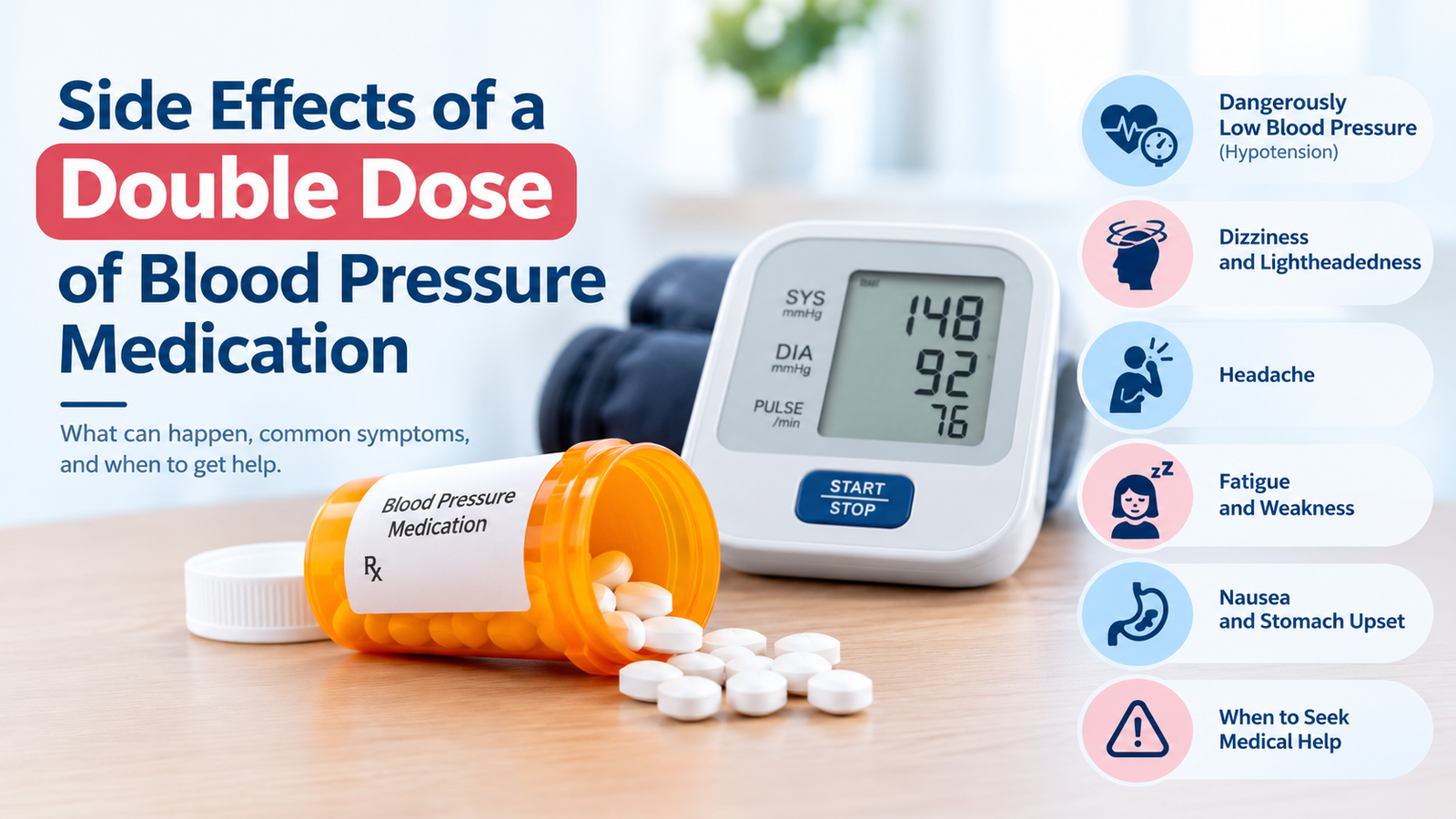
Common side effects of an extra dose
- dizziness or lightheadedness, worse on standing up
- feeling weak, tired or washed out
- headache
- nausea
- blurred vision
- a pulse that is slower or faster than usual
- passing more urine than normal, with water tablets
Symptoms often begin within 30 to 60 minutes of the extra dose. With slow-release and long-acting tablets they can start later and last many hours, sometimes into the next day.
Warning signs that need urgent help
- fainting or nearly fainting
- confusion, unusual drowsiness or difficulty waking
- chest pain or tightness
- shortness of breath or wheezing
- a very slow pulse, especially under 50 beats a minute with symptoms
- cold, clammy or pale skin
- a home reading with the top number under 90, together with symptoms
Side effects by type of blood pressure medicine
| Type | Examples | What an extra dose may cause | Points to know |
|---|---|---|---|
| ACE inhibitors | Lisinopril, ramipril, enalapril | Low blood pressure, dizziness | A single extra dose is usually tolerated well by adults. Repeated high doses can affect the kidneys and raise potassium. |
| ARBs | Losartan, valsartan, candesartan | Low blood pressure, dizziness | Similar to ACE inhibitors |
| Calcium channel blockers, amlodipine type | Amlodipine, nifedipine, felodipine | Low blood pressure, flushing, headache, fast pulse, swollen ankles | Amlodipine is long-acting, so effects can last more than a day |
| Calcium channel blockers, heart-slowing type | Verapamil, diltiazem | Slow pulse, low blood pressure, tiredness | More dangerous in overdose than most other types. Always ask for advice. |
| Beta blockers | Metoprolol, bisoprolol, atenolol, propranolol | Slow pulse, low blood pressure, tiredness, cold hands, wheeze in people with asthma | Can mask or cause low blood sugar, especially in people with diabetes and in children |
| Diuretics (water tablets) | Hydrochlorothiazide, indapamide, furosemide | More urine, thirst, dizziness, muscle cramps | The main risk is losing too much fluid and salt |
| Alpha blockers | Doxazosin, prazosin | Marked dizziness on standing, fainting | Sit or lie down and rise slowly |
| Centrally acting medicines | Clonidine, methyldopa | Drowsiness, slow pulse, low blood pressure, dry mouth | Clonidine is especially dangerous for children, even in small amounts |
Many people take a combination tablet that contains two of these types. Check the box or leaflet so that you can tell the adviser exactly what was taken.
Who is more likely to have problems
- Older adults, who are more sensitive to low blood pressure and more likely to be hurt in a fall.
- People who take several blood pressure medicines, or other medicines that lower pressure.
- People with kidney disease, heart failure or a slow heart rhythm.
- Anyone who is dehydrated, for example after vomiting, diarrhoea, heavy sweating or fasting in hot weather.
- People who have drunk alcohol, which lowers blood pressure further.
- Children. A single adult tablet of some blood pressure medicines can seriously harm a small child. Treat any accidental swallowing by a child as an emergency.
What to do, step by step
- Stay calm and stop what you are doing. Do not drive, climb ladders or operate machinery.
- Work out what was taken. Note the name, the strength in milligrams, how many tablets and at what time. Keep the packaging beside you.
- Call for advice. A poison centre, pharmacist or doctor can tell you whether you can stay at home and what to watch for. Have the packaging and a list of your other medicines ready.
- Sit or lie down if you feel lightheaded. Raising your legs helps blood return to the brain. Get up slowly.
- Drink water normally unless you have been told to limit fluids.
- Check your blood pressure and pulse if you have a home monitor, and write the readings down with the time.
- Ask someone to stay with you for the next few hours if you can.
- Ask about your next dose. Advice differs by medicine. Often you will be told to skip the next dose or to return to your usual schedule the following day. Do not decide this by guessing.
What not to do
- Do not take anything to "cancel out" the extra dose.
- Do not make yourself vomit.
- Do not stop your medicine for several days to compensate. Stopping some blood pressure medicines suddenly, such as beta blockers and clonidine, can cause a sharp rise in blood pressure or heart rate.
- Do not drink alcohol that day.
How long do the effects last?
It depends on how long the medicine stays in the body. Short-acting tablets wear off within several hours. Once-daily and slow-release tablets are designed to last 24 hours or more, and amlodipine remains in the body for days. If you were advised to stay at home, expect to feel normal by the next day in most cases. Call back if symptoms get worse or new ones appear.
When the doctor doubles your dose on purpose
A different situation is a planned increase, when your prescriber raises your dose because your blood pressure is still too high. Side effects after a planned increase are usually mild and often settle within one to two weeks.
| Type | Side effects that may appear or increase at a higher dose |
|---|---|
| ACE inhibitors | Dizziness, tiredness. A dry cough can occur at any dose. |
| ARBs | Dizziness, tiredness |
| Calcium channel blockers | Swollen ankles, flushing, headache, constipation with verapamil |
| Beta blockers | Tiredness, slow pulse, cold hands and feet |
| Diuretics | Passing urine more often, dizziness, cramps |
Tell your prescriber about side effects that bother you or do not settle. There is almost always another medicine or dose to try. Never raise your own dose because a home reading is high. A single high reading is common and is not a reason to take more.
How to stop it happening again
- Use a weekly pill organiser. An empty compartment tells you the dose has been taken.
- Tie the tablet to a daily habit, such as brushing your teeth or breakfast.
- Set a phone alarm, and mark the dose as taken in a reminder app or on a paper chart.
- Ask the pharmacy about blister packs sorted by day and time if you take several medicines.
- Keep one person in charge where a carer helps, so that two people do not each give the dose.
- Keep medicines in their original boxes and store them out of the sight and reach of children.
- Agree a plan in advance. Ask your doctor or pharmacist what to do if you miss a dose or take two, and write the answer on your medicine list.
What about a missed dose?
The usual advice is to take a missed dose when you remember, unless it is nearly time for the next one. In that case skip the missed dose and carry on as normal. Do not take two doses together to catch up. Check the leaflet for your own medicine, because advice varies.
To understand how doctors judge whether a medicine is working, read how to know if a medication is effective.
Common questions
Is a double dose of blood pressure medicine dangerous?
For most adults, one extra dose of most blood pressure medicines is not dangerous, but it can be for some drugs and some people. Verapamil, diltiazem, beta blockers and clonidine deserve more caution. Call for advice every time.
I took two tablets and feel fine. Do I still need to call?
Yes, it is sensible. Slow-release tablets can cause delayed effects, and the adviser can tell you what to do about your next dose.
Should I drink a lot of water or eat salt?
Drink normally. Do not load up on salt or fluids unless a health professional tells you to, especially if you have heart or kidney problems.
Can I take a second tablet if my blood pressure is high?
No. Do not adjust your own dose. If your readings stay high over several days, contact your prescriber. Seek urgent care for very high readings with chest pain, breathlessness, severe headache, weakness or trouble speaking.
My child swallowed one of my tablets. What should I do?
Call a poison centre or emergency services immediately, even if the child seems well. Do not wait for symptoms.
This guide is general education and is not medical, legal or career advice. Entry rules, fees, training lengths and treatment guidance change, so confirm them with the official body in your country or with your own doctor or pharmacist. Read our disclaimer. Found an error? Tell us.