Home / Guides / Medical Tests
What Does a Negative TB Test Look Like? Pictures, Results & Reading Guide
Wondering what a negative TB test looks like? Learn how a negative TB skin test appears after 48–72 hours, bump size, results interpretation, and when to seek medical advice.
On this page (23 sections)
- What Does a Negative TB Test Look Like? Pictures, Results & Complete Guide
- What Does a Negative TB Test Look Like?
- What Does a Negative TB Test Look Like After 48 Hours?
- What Does a Negative TB Test Look Like After 72 Hours?
- How Is a TB Skin Test Read?
- How Many Millimeters Is a Negative TB Test?
- Negative TB Test vs Positive TB Test: Difference
- Does a Negative TB Test Have a Bump?
- Can a TB Test Be Negative With Redness?
- Can You Have TB With a Negative Test?
- Symptoms That May Require Additional TB Testing
- Why Can a TB Test Be Wrong?
- False Negative TB Test Causes
- False Positive TB Test Causes
- TB Skin Test vs TB Blood Test
- TB Skin Test (PPD/Mantoux)
- TB Blood Test (IGRA)
- What Should You Do After a Negative TB Test?
- How To Take Care of Your TB Test Site
- You Can:
- Avoid:
- Frequently Asked Questions About Negative TB Tests
- Final Thoughts
What Does a Negative TB Test Look Like? Pictures, Results & Complete Guide
A tuberculosis (TB) skin test can leave many people wondering whether their result is normal. If you recently had a TB test, you may be asking: what does a negative TB test look like?
A negative TB test usually appears as no raised bump or a very small hardened area at the injection site after the test is read. The skin may look almost normal, with little to no swelling or redness.
However, the appearance alone is not enough to determine your result. A healthcare professional must measure the induration (firm raised area under the skin) 48 to 72 hours after the test.
This guide explains what a negative TB test looks like, how results are measured, what different bump sizes mean, and how negative results compare with positive TB tests.
What Does a Negative TB Test Look Like?
A negative TB skin test usually looks like the test area has returned close to normal after a few days.
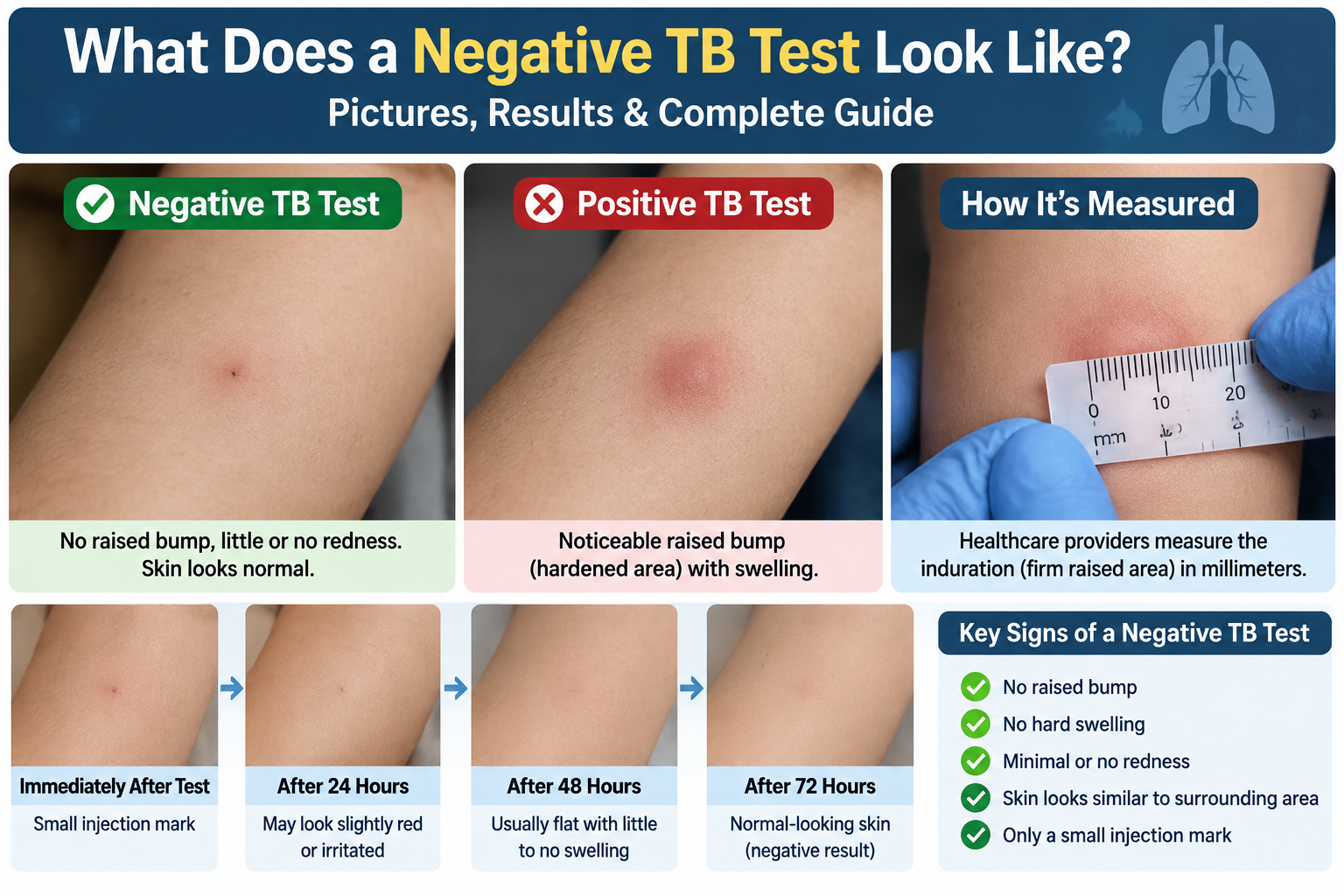
Common signs of a negative TB test include:
- No visible raised bump
- No hard swelling under the skin
- Very little or no redness
- Skin looks similar to the surrounding area
- Only a small mark where the needle was inserted
Some people may notice a tiny bump immediately after the injection, but this often disappears within a short time.
The important measurement is not redness but the size of the firm, raised swelling (induration).
What Does a Negative TB Test Look Like After 48 Hours?
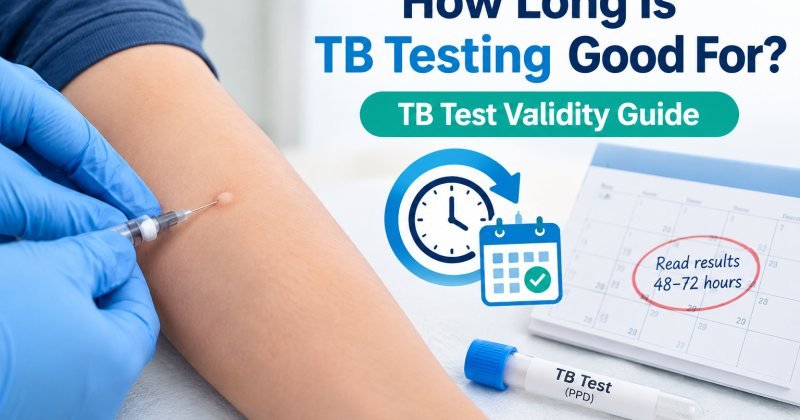
A TB skin test is usually checked between 48 and 72 hours after placement.
After 48 hours, a negative TB test may look like:
- Flat skin surface
- No noticeable swelling
- No firm raised area
- Minimal irritation
At this stage, healthcare providers examine the forearm and measure any hardened area.
You should not judge the result only by looking at your arm because some reactions are difficult to see.
What Does a Negative TB Test Look Like After 72 Hours?
After 72 hours, a negative TB test generally continues to show:
- No significant bump
- No measurable induration
- Normal-looking skin
The healthcare provider measures the reaction using millimeters (mm). If the reaction does not meet the positive threshold based on your risk level, the result is considered negative.
How Is a TB Skin Test Read?
A TB skin test, also called a tuberculin skin test (TST), Mantoux test, or PPD test, is read by measuring the size of the raised, firm area.
Healthcare professionals do not measure:
- Redness
- Itching
- Minor irritation
- The injection mark
They measure:
Induration = the firm swelling beneath the skin
The measurement is recorded in millimeters.
How Many Millimeters Is a Negative TB Test?
The definition of a negative TB test depends on your health situation and risk factors.
Generally:
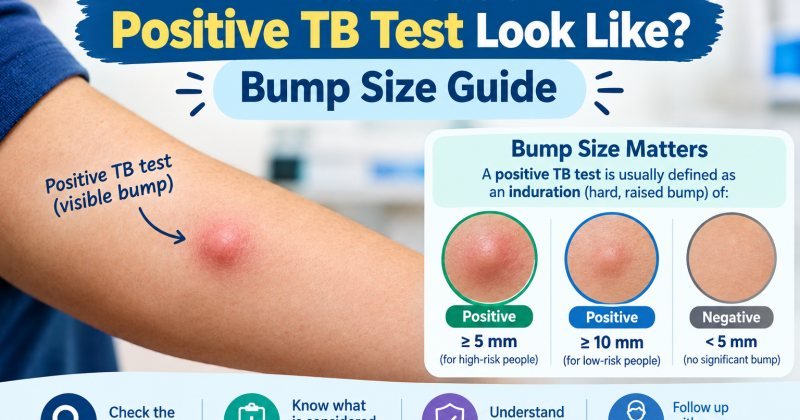
| Risk Level | Positive TB Test Threshold |
|---|---|
| High-risk individuals | 5 mm or more may be positive |
| Moderate-risk individuals | 10 mm or more may be positive |
| Lower-risk individuals | 15 mm or more may be positive |
A measurement below the applicable threshold is usually considered negative.
Your healthcare provider considers factors such as:
- Recent TB exposure
- Immune system health
- Previous medical conditions
- Workplace exposure
- Travel history
Negative TB Test vs Positive TB Test: Difference
Understanding the difference between negative and positive TB test results can help you know what doctors look for.
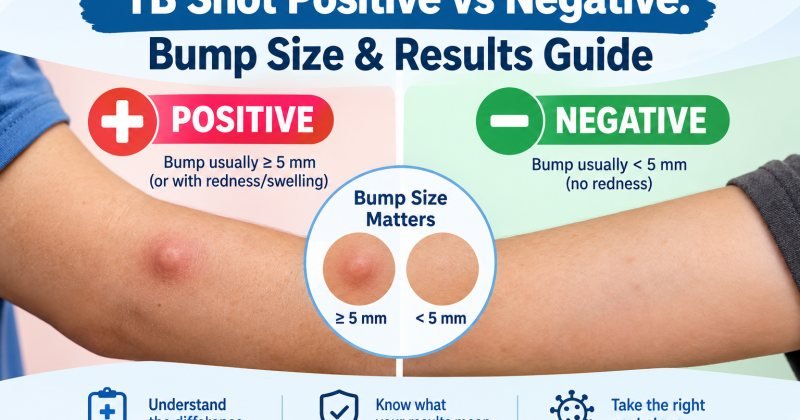
| Negative TB Test | Positive TB Test |
|---|---|
| No raised bump or very small reaction | Larger hardened bump |
| Minimal swelling | Noticeable induration |
| Reaction below positive threshold | Reaction meets positive criteria |
| TB infection less likely | Requires further medical evaluation |
A positive test does not always mean someone has active TB disease. It usually means the person may have been infected with TB bacteria and needs additional evaluation.
Does a Negative TB Test Have a Bump?
A negative TB test can sometimes have a very small bump.
A small reaction does not automatically mean the test is positive.
Doctors look at:
- The size of the hardened area
- Your TB risk factors
- Your medical history
A tiny bump or slight redness can occur even when the final result is negative.
Can a TB Test Be Negative With Redness?
Yes, redness alone does not determine whether a TB test is positive.
The TB skin test measures induration, not redness.
You may have:
- Mild redness
- Slight itching
- Minor irritation
and still receive a negative result.
Can You Have TB With a Negative Test?
Although TB skin tests are useful screening tools, a negative result does not completely rule out TB in every situation.
A healthcare provider may recommend additional testing if you:
- Recently had contact with someone who has TB
- Have symptoms of TB
- Have a weakened immune system
- Recently became infected
Possible additional tests include:
- TB blood tests (IGRA)
- Chest X-ray
- Other medical evaluations
Symptoms That May Require Additional TB Testing
Seek medical advice if you have symptoms such as:
- Persistent cough lasting more than three weeks
- Coughing blood
- Chest pain
- Night sweats
- Fever
- Unexplained weight loss
- Extreme tiredness
A negative TB test does not replace medical evaluation when symptoms are present.
Why Can a TB Test Be Wrong?
Sometimes TB test results may not accurately reflect infection status.
False Negative TB Test Causes
A false negative result can happen because of:
- Recent TB infection
- Weak immune system
- Certain medical conditions
- Severe illness
- Very young age
- Testing too soon after exposure
False Positive TB Test Causes
A false positive result may happen because of:
- Previous BCG vaccination
- Exposure to certain non-TB bacteria
- Previous TB infection
Your doctor may recommend a TB blood test for clarification.
TB Skin Test vs TB Blood Test
There are two common ways to test for TB infection:
TB Skin Test (PPD/Mantoux)
Advantages:
- Commonly available
- Simple procedure
- Low cost
Limitations:
- Requires a second visit
- Results can be affected by BCG vaccination
TB Blood Test (IGRA)
Examples:
- QuantiFERON-TB Gold
- T-SPOT.TB
Advantages:
- Requires only one visit
- Usually preferred for people who received BCG vaccine
- Laboratory-based measurement
Your healthcare provider can recommend the best option based on your situation.
What Should You Do After a Negative TB Test?
After receiving a negative TB test result:
- Keep your result documentation if needed for work or school
- Follow your healthcare provider’s instructions
- Repeat testing if required because of exposure or workplace rules
Some people may need regular TB screening, including:
- Healthcare workers
- Laboratory workers
- People with ongoing TB exposure risks
How To Take Care of Your TB Test Site
After receiving the injection:
You Can:
✓ Wash your arm normally
✓ Keep the area clean
✓ Use a cold cloth if itching occurs
Avoid:
✗ Scratching the area
✗ Rubbing the injection site
✗ Applying creams without medical advice
Frequently Asked Questions About Negative TB Tests
What does a negative TB test look like?
A negative TB test usually looks like normal skin with no raised bump or only a very small reaction at the injection site.
How do I know if my TB test is negative?
A healthcare provider confirms the result by measuring the firm raised area 48–72 hours after the test.
Does a negative TB test mean I do not have TB?
A negative result usually means TB infection is unlikely, but additional testing may be needed if you have symptoms or recent exposure.
How long does it take to read a TB skin test?
A TB skin test is usually read 48 to 72 hours after placement.
Is redness normal after a TB test?
Yes, mild redness can occur. Redness alone does not determine whether the test is positive.
What happens if my TB test has no reaction?
No reaction or a very small reaction usually indicates a negative TB skin test.
Final Thoughts
So, what does a negative TB test look like?
A negative TB test typically shows little to no swelling, no significant raised bump, and minimal redness after 48–72 hours. However, the final result should always be determined by a trained healthcare professional measuring the induration size.
If you have symptoms, recent exposure to TB, or health conditions affecting your immune system, speak with a healthcare provider even if your test appears negative.
This guide is general education and is not medical, legal or career advice. Entry rules, fees, training lengths and treatment guidance change, so confirm them with the official body in your country or with your own doctor or pharmacist. Read our disclaimer. Found an error? Tell us.